
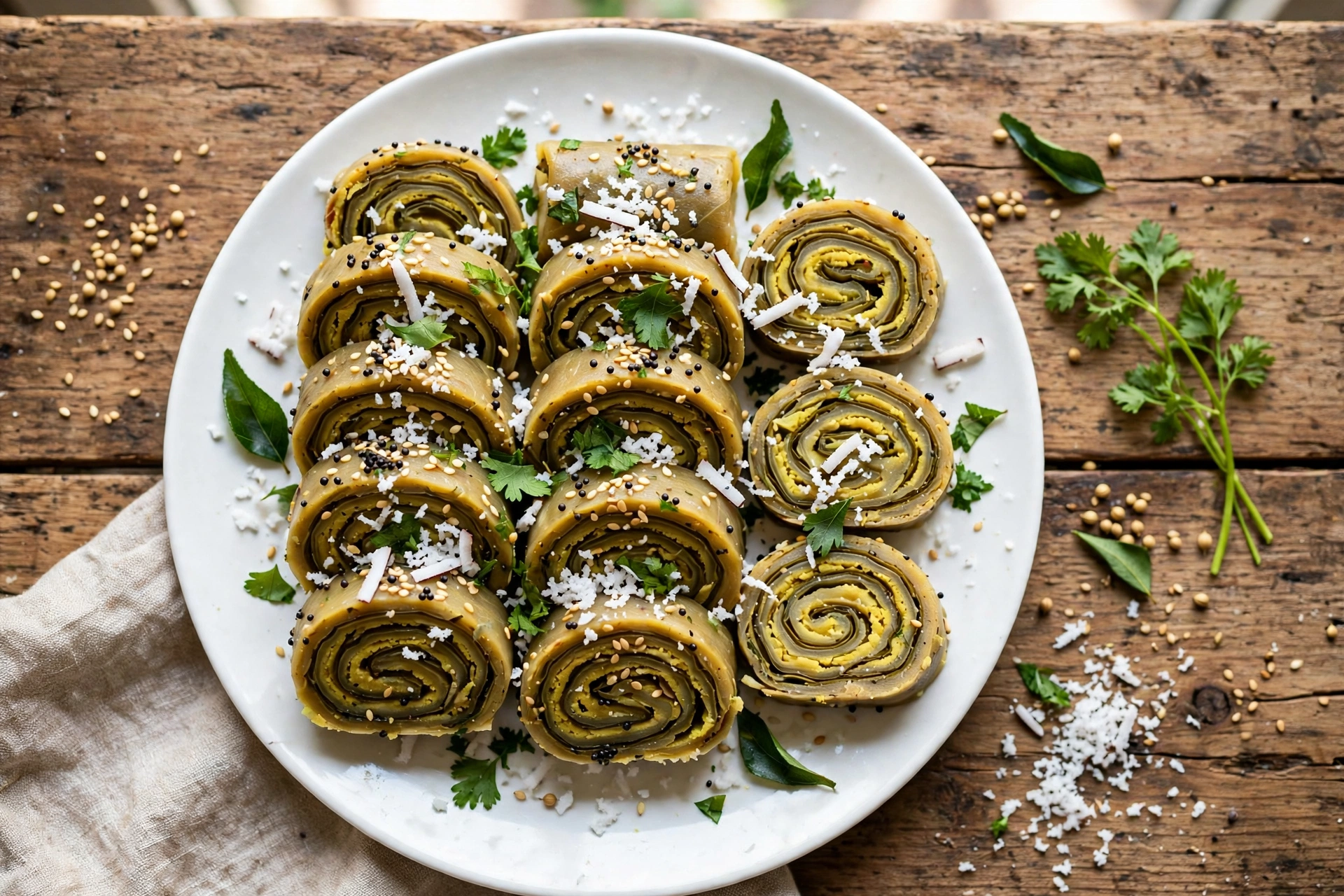
Patra, also known as Alu Vadi in Maharashtra, is a traditional Gujarati farsan made from large colocasia leaves (arbi ke patte) spread with a spiced gram flour paste, rolled up, steamed, and then sliced and tempered. It tastes mildly tangy, spicy, and earthy, with a soft, melt-in-the-mouth texture and a crunchy tempering of sesame seeds on top.
This recipe works because the gram flour paste is spread evenly and the rolls are steamed until just set, so they slice cleanly without falling apart. It is a good recipe for festivals, for tea-time snacks, and for a Gujarati thali. It needs no frying, and it uses fresh green leaves, so it is lighter than most fried farsan.
Patra
Equipment
- Steamer
Ingredients
- 8-10 large Colocasia leaves arbi ke patte
- 1 cup Gram flour besan (120 g)
- 2 tablespoons Tamarind pulp
- 1 tablespoon Jaggery
- 1 teaspoon Green chilli-ginger paste
- 1 teaspoon Red chilli powder
- 1/2 teaspoon Turmeric powder
- 1 teaspoon Coriander powder
- 1/2 teaspoon Cumin powder
- Salt to taste
- 1 pinch Asafoetida hing
- 1/2 cup Water 120 ml approx.
For tempering:
- 1 tablespoon Oil for tempering
- 1 teaspoon Mustard seeds
- 1 tablespoon Sesame seeds
- 8-10 Curry leaves
- 2 tablespoons Grated coconut for garnish
- 2 tablespoons Chopped coriander for garnish
Instructions
- Wash and dry the colocasia leaves, and trim the thick stem from the back of each leaf.
- Mix gram flour, tamarind pulp, jaggery, spices, salt, hing, and water into a thick, smooth paste.
- Place a leaf vein-side up, spread a thin layer of paste, and layer 3–4 leaves one over the other, spreading paste between each.
- Fold in the sides and roll tightly from the stem end.
- Steam the rolls for 20–25 minutes until firm.
- Cool, slice into rounds, temper with mustard seeds, sesame seeds, and curry leaves, garnish with coconut and coriander, and serve.
Notes
Ingredients
| Ingredient | Quantity |
|---|---|
| Colocasia leaves (arbi ke patte) | 8–10 large leaves |
| Gram flour (besan) | 1 cup (120 g) |
| Tamarind pulp | 2 tablespoons |
| Jaggery | 1 tablespoon |
| Green chilli-ginger paste | 1 teaspoon |
| Red chilli powder | 1 teaspoon |
| Turmeric powder | 1/2 teaspoon |
| Coriander powder | 1 teaspoon |
| Cumin powder | 1/2 teaspoon |
| Salt | To taste |
| Asafoetida (hing) | A pinch |
| Water | 1/2 cup (120 ml) approx. |
| Oil (for tempering) | 1 tablespoon |
| Mustard seeds | 1 teaspoon |
| Sesame seeds | 1 tablespoon |
| Curry leaves | 8–10 |
| Grated coconut (for garnish) | 2 tablespoons |
| Chopped coriander (for garnish) | 2 tablespoons |
Optional ingredients: 1 tablespoon of sesame seeds mixed into the paste, 1 teaspoon of sugar instead of jaggery, a pinch of garam masala for a warmer flavour.
How to Make Patra
Step 1: Prepare the Colocasia Leaves
Wash the colocasia leaves well under running water and pat them dry with a clean cloth. Turn each leaf over and trim the thick central stem from the back with a knife, so the leaf lies flat. This step is important — a thick stem will not roll smoothly.
Step 2: Make the Gram Flour Paste
In a bowl, add gram flour, tamarind pulp, jaggery, green chilli-ginger paste, red chilli powder, turmeric, coriander powder, cumin powder, salt, and hing. Add water a little at a time and mix into a thick, smooth paste. It should be like a thick chutney — not runny, or it will drip off the leaves.
Step 3: Layer the Leaves
Place one large leaf on a clean board, vein side up, with the pointed tip facing away from you. Spread a thin, even layer of paste over the leaf. Place a second leaf on top, slightly overlapping, and spread paste again. Repeat with 3–4 leaves, making the stack smaller as you go.
Step 4: Roll Tightly
Fold the left and right edges of the leaf stack inwards. Then roll tightly from the stem end towards the tip, pressing gently as you roll. Seal the end with a little paste. Make 2–3 rolls from the remaining leaves.
Step 5: Steam the Rolls
Place the rolls in a greased steamer plate or idli stand. Steam on medium flame for 20–25 minutes, until the rolls feel firm and a knife comes out clean. Let them cool for 10 minutes before slicing — hot rolls will break.
Step 6: Slice and Temper
Cut each roll into slices about half an inch thick. Heat oil in a pan, add mustard seeds and let them splutter, then add sesame seeds and curry leaves. Place the patra slices in the pan and shallow-fry for 1–2 minutes on each side until lightly crisp. Garnish with grated coconut and chopped coriander, and serve warm.
What is Patra?
Patra is one of Gujarat’s oldest farsan dishes, made when colocasia leaves are fresh and tender in the monsoon season. The same dish is called Alu Vadi in Maharashtra, where it is made with a similar gram flour and tamarind paste. In Gujarat it is served as a snack, as part of a thali, and at festivals and family functions. The sweet-sour taste of tamarind and jaggery is the classic Gujarati touch.
Tips for Perfect Patra
- Choose large, fresh, tender leaves. Old, tough leaves stay fibrous even after steaming.
- Trim the thick stem properly. If the stem is left thick, the roll will be uneven and hard to slice.
- Do not make the paste too thin. A runny paste drips out while rolling and makes the rolls soggy.
- Roll tightly, but do not press so hard that the paste squeezes out.
- Steam until fully cooked. Undercooked colocasia leaves can cause an itchy feeling in the throat — steam for the full 20–25 minutes.
- Cool the rolls before slicing. Slicing hot rolls makes them crumble.
- Temper just before serving. The sesame seeds stay crunchy and the slices stay crisp on the edges.
Variations
Spicy Patra: Add 1 extra teaspoon of green chilli-ginger paste and a pinch of black pepper to the paste, and slit green chillies in the tempering.
Sweet Patra: Increase the jaggery to 2 tablespoons for a sweeter, milder taste, as many Gujarati families prefer.
Fried Patra: After steaming and slicing, deep-fry the slices until golden and crisp instead of shallow-frying them.
Jain Patra: Skip the colocasia leaves’ stem trimming issue by using the same paste on spinach leaves, and avoid ginger if your Jain tradition requires it.
Kids’ Patra: Skip the green chilli paste, keep the jaggery, and garnish with extra coconut. It is mild, sweet, and soft for children.
What to Serve with Patra
Serve patra with:
- Green chutney
- Masala chai — a classic Gujarati tea-time pair
- Thepla — for a full Gujarati breakfast spread
- Khaman Dhokla — another soft Gujarati snack, often served with patra at functions
- Muthia — another steamed Gujarati farsan for a thali
- Curd or buttermilk, if serving it as a light meal
Storage Tips
- Room temperature: Best eaten fresh on the same day. Keep covered for up to 4–5 hours.
- Fridge: Store the steamed, unsliced rolls in an airtight container for up to 3 days. Slice and temper fresh before serving.
- Freezer: Freeze the steamed rolls (before tempering) for up to 1 month. Thaw in the fridge, then slice and temper.
- Reheating: Warm the slices in a pan with a little oil. Do not microwave for long, or they turn rubbery.
Nutrition
| Nutrient | Amount (approx. per serving) |
|---|---|
| Calories | 210 kcal |
| Protein | 7 g |
| Carbohydrates | 30 g |
| Fat | 7 g |
| Fibre | 5 g |
Patra is steamed, not fried, so it uses very little oil. Colocasia leaves add fibre and iron, gram flour gives protein, and the tamarind-jaggery paste adds a sweet-sour taste without refined sugar. It is a good snack for people who want something filling but light.
Frequently Asked Questions (FAQs)
1. Why do my patra rolls fall apart while slicing?
The rolls were sliced while still hot, or they were under-steamed. Cool them for at least 10 minutes and steam for the full 20–25 minutes so they set firmly.
2. Why do colocasia leaves make my throat itch?
Undercooked colocasia leaves can cause itching. Always steam the rolls fully, and use tamarind in the paste — its sourness helps. If the leaves are very old or tough, they are more likely to itch.
3. Can I make patra without colocasia leaves?
Yes. Use large spinach leaves or Swiss chard leaves instead. The taste will be milder, but the method stays the same. Colocasia gives the classic flavour, so use it when you can find it.
4. Can I make patra in advance?
Yes. Steam the rolls, cool them, and store them in the fridge for up to 3 days. Slice and temper them fresh just before serving.
5. Is patra gluten-free?
Yes, if you make it with gram flour alone and gluten-free asafoetida. Check your hing — some brands add wheat flour.
6. Can I freeze patra?
Yes. Freeze the steamed rolls before tempering for up to 1 month. Thaw in the fridge overnight, then slice and temper.
7. Why is my gram flour paste too runny?
Too much water was added. Add water a spoon at a time and mix well. The paste should coat a spoon thickly and not drip off the leaf.
8. What is the difference between patra and alu vadi?
They are the same dish. Patra is the Gujarati name, and Alu Vadi is the Maharashtrian name. The Gujarati version is usually a little sweeter, with more jaggery.
Conclusion
Patra is a beautiful Gujarati farsan — green leaves, golden gram flour, and a sweet-sour taste that is hard to forget. It looks impressive on a plate, yet it is only leaves, besan, and patience. Try this recipe for tea-time, for a festival, or as part of a Gujarati thali, and tell us how your rolls turned out.
About the Author
Vaishali Soni loves cooking traditional Gujarati food at home and sharing tested, step-by-step recipes that work for beginners. She writes Gujarati Food Recipes with Beena Soni. Try this recipe and tell us in the comments how it turned out.