
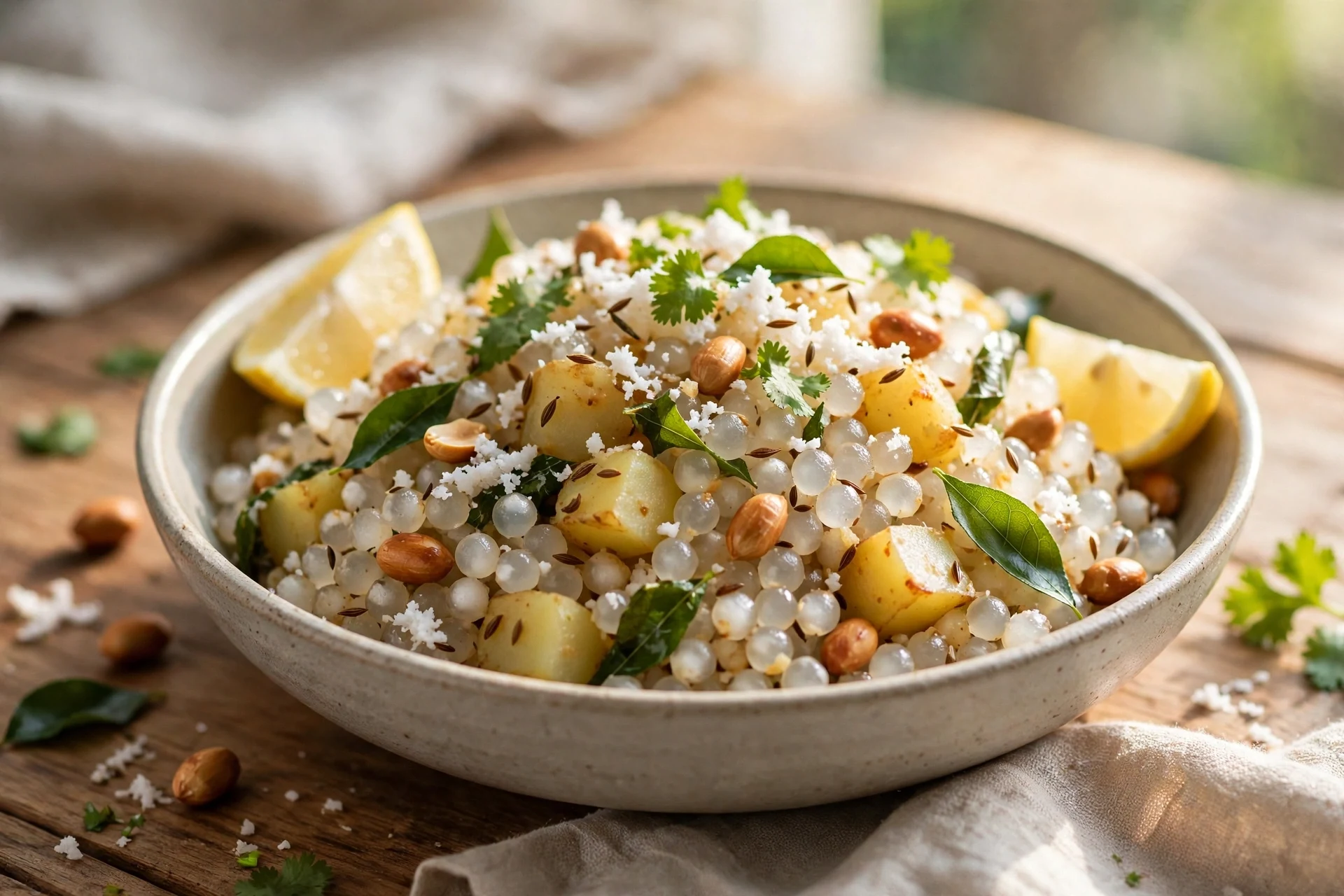
Sabudana khichdi is a light, fluffy breakfast made from soaked sago pearls (sabudana), roasted peanuts, and potatoes, tempered with cumin seeds, curry leaves, and green chillies. It tastes mild, nutty, and gently tangy from a squeeze of lemon, and it is the most popular farali dish eaten on fasting days like Ekadashi, Navratri, and Mahashivratri.
This recipe works because the sabudana is soaked just right — soft on the outside, still separate, never sticky. It needs no onion or garlic, cooks in 10 minutes, and is filling without being heavy. It is perfect for a fasting morning, a light breakfast, or a lunchbox.
Sabudana Khichdi
Ingredients
- 1 cup Sabudana sago pearls, 180 g
- 2 medium Potatoes
- 1/2 cup Roasted peanuts 75 g
- 2 Green chillies finely chopped
- 1/2 inch Ginger grated
- 1 teaspoon Cumin seeds
- 8–10 Curry leaves
- 2 tablespoons Oil or ghee
- 1 tablespoon Lemon juice
- 1 teaspoon Sugar
- Rock salt sendha namak, to taste
- 2 tablespoons Fresh coriander leaves chopped
- 2 tablespoons Grated coconut
Instructions
- Wash and soak the sabudana for 5–6 hours, then drain well.
- Boil, peel, and dice the potatoes, and crush the roasted peanuts coarsely.
- Mix the soaked sabudana with crushed peanuts, sugar, and rock salt.
- Heat oil, add cumin seeds, curry leaves, green chillies, and ginger.
- Add the potatoes and cook for 2 minutes, then add the sabudana mix and cook on low flame for 4–5 minutes.
- Add lemon juice, garnish with coriander and coconut, and serve hot.
Notes
Ingredients
| Ingredient | Quantity |
|---|---|
| Sabudana (sago pearls) | 1 cup (180 g) |
| Potatoes | 2 medium |
| Roasted peanuts | 1/2 cup (75 g) |
| Green chillies | 2, finely chopped |
| Ginger | 1/2 inch, grated |
| Cumin seeds | 1 teaspoon |
| Curry leaves | 8–10 |
| Oil or ghee | 2 tablespoons |
| Lemon juice | 1 tablespoon |
| Sugar | 1 teaspoon |
| Rock salt (sendha namak) | To taste |
| Fresh coriander leaves | 2 tablespoons, chopped |
| Grated coconut | 2 tablespoons |
Optional ingredients: 1/4 cup of grated raw coconut mixed in while cooking, 1 tablespoon of cashew pieces, a pinch of black pepper instead of green chillies for a milder taste.
How to Make Sabudana Khichdi
Step 1: Soak the Sabudana
Wash the sabudana in 2–3 changes of water until the water runs clear. Soak it in just enough water to cover the pearls by about half an inch — too much water makes them mushy. Leave for 5–6 hours, or overnight. The pearls are ready when you can press one between your fingers and it mashes easily with no hard centre.
Step 2: Prepare the Potatoes and Peanuts
Boil the potatoes until just soft, peel them, and cut into small cubes. Roast the peanuts in a dry pan until they smell nutty, cool them, and crush coarsely in a mixer or with a rolling pin — keep some pieces, do not make a powder.
Step 3: Mix the Sabudana
Drain the soaked sabudana well in a strainer and leave it for 5 minutes so all the water drips out. In a bowl, mix the sabudana with the crushed peanuts, sugar, and rock salt. The peanuts coat the pearls and stop them sticking together.
Step 4: Temper the Spices
Heat oil or ghee in a wide pan on medium flame. Add cumin seeds and let them crackle, then add curry leaves, green chillies, and grated ginger. Fry for 30 seconds until the curry leaves turn crisp and the kitchen smells lovely.
Step 5: Add the Potatoes
Add the diced potatoes to the pan and cook for 2 minutes, stirring gently so the pieces get coated in the tempering and turn lightly golden at the edges.
Step 6: Cook the Khichdi
Add the sabudana mix to the pan and stir gently. Cook on a low flame for 4–5 minutes, stirring now and then, until the pearls turn translucent and soft. Do not add any water. Turn off the flame, add lemon juice, and mix once more. Garnish with chopped coriander and grated coconut, and serve hot.
What is Sabudana Khichdi?
Sabudana khichdi is a fasting dish from Maharashtra that has become a favourite across Gujarat too, especially on Ekadashi and during Navratri. Sabudana is made from tapioca starch, so it is light on the stomach and gives quick energy — exactly what a fasting day needs. In Gujarati homes it is also eaten as an ordinary breakfast, with regular salt instead of rock salt, because it is quick, filling, and children love the soft pearls and crunchy peanuts.
Tips for Perfect Sabudana Khichdi
- Soak in just enough water. The pearls should be covered by only half an inch of water. Too much water is the number one reason khichdi turns sticky.
- Test a pearl before cooking. Press it between your fingers — it should mash easily with no hard white centre. If it is still hard, sprinkle a little water and wait 30 minutes more.
- Drain well. Let the soaked sabudana sit in a strainer for 5 minutes before mixing.
- Mix the peanuts in first. Crushed peanuts coat each pearl and keep them separate in the pan.
- Cook on a low flame. High heat makes the pearls stick together and turn into a lump.
- Do not add water while cooking. If the khichdi looks dry, cover the pan for 2 minutes instead — the steam softens the pearls.
- Serve hot. Sabudana khichdi firms up as it cools, so eat it straight from the pan.
Variations
Sabudana Vada Khichdi: Crumble 2–3 leftover sabudana vadas into the khichdi while cooking for a crunchy, fried flavour.
Sweet Sabudana Khichdi: Skip the chillies and cumin, add 2 tablespoons of jaggery and a pinch of cardamom, and serve with milk — a farali sweet for fasting days.
Peanut-Free Khichdi: Replace the peanuts with 1/4 cup of roasted cashew pieces or sesame seeds if there is a nut allergy in the family.
Spicy Sabudana Khichdi: Add 1 extra green chilli and 1/2 teaspoon of red chilli powder in the tempering, and finish with a pinch of black pepper.
Veggie Sabudana Khichdi: Add 1/2 cup of diced carrots and green peas with the potatoes for a non-fasting, everyday version — good for a lunchbox.
What to Serve with Sabudana Khichdi
Serve sabudana khichdi with:
- Curd or buttermilk — a cool, soothing side for a fasting meal
- Farali Pattice — another farali favourite for the same fasting thali
- Khandvi — soft gram flour rolls, a light snack to go with it
- Lemon wedges and green chutney on the side
- Masala chai — a warm cup of spiced tea with breakfast
- Roasted peanuts and a banana, if you want a fuller fasting breakfast
Storage Tips
- Room temperature: Best eaten fresh and hot. Keep covered for up to 2 hours.
- Fridge: Store in an airtight container for up to 1 day. The pearls firm up when cold.
- Freezer: Do not freeze sabudana khichdi — the pearls turn hard and rubbery when thawed.
- Reheating: Sprinkle a few drops of water over the khichdi and warm it in a pan on a low flame, covered, for 2–3 minutes. Do not microwave on high.
Nutrition
| Nutrient | Amount (approx. per serving) |
|---|---|
| Calories | 280 kcal |
| Protein | 6 g |
| Carbohydrates | 45 g |
| Fat | 9 g |
| Fibre | 2 g |
Sabudana gives quick, light energy, which is why it is the classic fasting food — it fills you up without weighing you down. The peanuts add protein and healthy fats, and the potatoes add potassium and a little more staying power. It is not a high-protein meal, so on non-fasting days, serve it with a bowl of curd to balance it out.
Frequently Asked Questions (FAQs)
1. Why is my sabudana khichdi sticky?
The sabudana was soaked in too much water, or water was added while cooking. Soak in just enough water to cover the pearls by half an inch, drain well, and never add water in the pan.
2. How long should I soak sabudana?
Usually 5–6 hours, or overnight. It depends on the size of the pearls — small pearls need 4 hours, large pearls need 6–8 hours. Always do the finger test before cooking.
3. Can I soak sabudana overnight?
Yes, overnight soaking is the easiest way. Use just enough water to cover the pearls, and drain well in the morning.
4. Is sabudana khichdi good for fasting?
Yes, it is one of the most popular vrat dishes in India. Use rock salt (sendha namak) instead of regular salt, and skip nothing else — the recipe is already onion- and garlic-free.
5. Can I make sabudana khichdi without peanuts?
Yes. Use roasted cashews, sesame seeds, or skip the nuts entirely — but the khichdi may stick a little more, so mix the sabudana with a spoon of oil before cooking.
6. Is sabudana khichdi gluten-free?
Yes. Sabudana, peanuts, potatoes, and the spices are all naturally gluten-free. Just check that your asafoetida is not used — this recipe does not need it.
7. Can I make sabudana khichdi in advance?
It is best made fresh. If you must make it early, keep it covered and warm for up to 2 hours. Do not refrigerate and reheat it more than once — the pearls turn hard.
8. What can I use instead of rock salt?
On non-fasting days, use regular salt in the same amount. On fasting days, rock salt is the traditional choice and is allowed in most fasting traditions.
Conclusion
Sabudana khichdi is proof that fasting food can be delicious — soft pearls, crunchy peanuts, and a gentle tempering that comes together in 10 minutes. Soak the sabudana tonight, make it fresh in the morning, and tell us how your fasting breakfast turned out.
About the Author
Vaishali Soni loves cooking traditional Gujarati food at home and sharing tested, step-by-step recipes that work for beginners. She writes Gujarati Food Recipes with Beena Soni. Try this recipe and tell us in the comments how it turned out.