
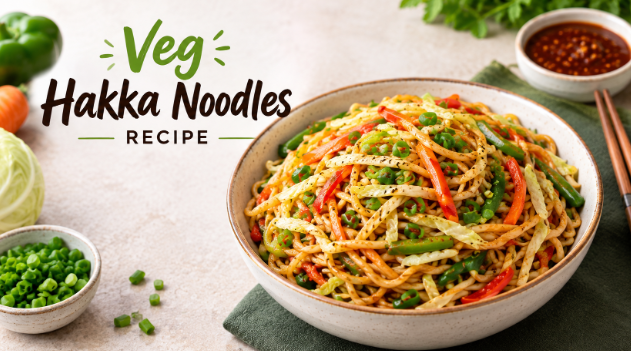
If you love the smoky, slightly spicy and perfectly tossed noodles served at Indian-Chinese restaurants, this veg hakka noodles recipe is one you’ll want to make again and again. It is quick, colorful, flavorful and packed with crunchy vegetables. The best part is that you can prepare these noodles at home in about 30 minutes.
This Indian veg hakka noodles recipe uses simple ingredients such as noodles, cabbage, capsicum, carrot, spring onions, garlic, soy sauce and a few basic seasonings. The vegetables are cooked quickly over high heat so they stay slightly crunchy, while the noodles absorb all the delicious sauces.
Whether you are looking for an easy veg hakka noodles recipe, a restaurant-style dinner, or a quick weekend snack, this veg hakka noodles recipe is a perfect choice.
What Are Veg Hakka Noodles?
Veg Hakka noodles are an Indo-Chinese noodle dish made by stir-frying boiled noodles with fresh vegetables, aromatics and sauces. The word “Hakka” is associated with the Hakka Chinese community, but the version commonly enjoyed in India has developed its own distinct Indo-Chinese flavor.
Unlike saucy noodle dishes, Hakka noodles are generally dry and tossed with vegetables and seasonings. The secret to getting that restaurant-style taste is high heat, quick cooking and properly boiled noodles.
This veg hakka noodles recipe vegetarian version is completely meat-free and can easily be customized with your favorite vegetables.
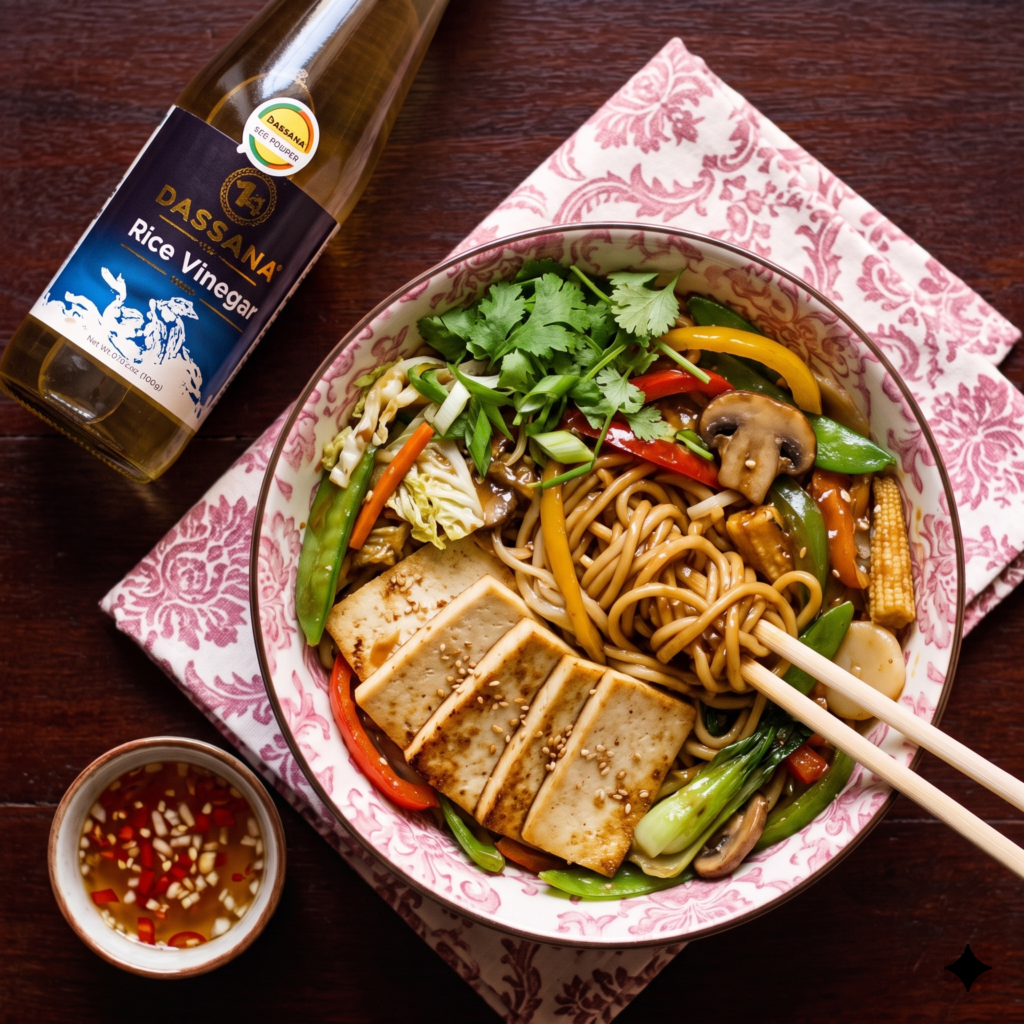
Veg Hakka Noodles Ingredients
Here are the ingredients you need to make this flavorful noodle dish at home.
Main Ingredients
- 200–250 g Hakka noodles
- 2 tablespoons cooking oil
- 1 tablespoon finely chopped garlic
- 1–2 green chilies, finely chopped
- ½ cup shredded cabbage
- ½ cup julienned carrot
- ½ cup thinly sliced capsicum
- ¼ cup spring onion whites
- ¼ cup spring onion greens
- 2 tablespoons finely sliced onion
Sauces and Seasonings
- 1 tablespoon light soy sauce
- 1 tablespoon red chili sauce
- 1 teaspoon vinegar
- ½ teaspoon black pepper powder
- Salt, as needed
- ½ teaspoon sugar, optional
- ½ teaspoon toasted sesame oil, optional
These simple veg hakka noodles recipe ingredients are easy to find in most Indian supermarkets.
How to Make Veg Hakka Noodles Recipe
The preparation is quite straightforward, but a few small techniques can make a big difference to the final texture.
Step 1: Boil the Noodles
Bring plenty of water to a rolling boil in a large pot. Add a little salt and a few drops of oil.
Add the Hakka noodles and cook according to the package instructions. Do not overcook them. The noodles should be cooked but still slightly firm.
Once cooked, drain the noodles immediately.
Important Tip
Rinse the noodles under cold running water to stop the cooking process. Toss them gently with a little oil and keep them aside.
This prevents the noodles from becoming sticky or mushy.
Step 2: Prepare the Vegetables
Slice all the vegetables thinly and keep them ready before you start cooking.
Hakka noodles are cooked very quickly, so you don’t want to stop halfway through to chop vegetables.
For the best texture, cut the vegetables into thin, uniform strips.
Step 3: Heat the Wok
Place a wok or large frying pan over high heat.
Add the oil and let it become hot. Add chopped garlic and green chilies.
Stir-fry for a few seconds until the garlic becomes aromatic. Avoid burning the garlic because burnt garlic can make the noodles taste bitter.
Step 4: Stir-Fry the Vegetables
Add onion, spring onion whites, carrot, cabbage and capsicum.
Stir-fry everything on high heat for about 2–3 minutes.
The vegetables should remain slightly crunchy rather than becoming completely soft.
This quick stir-frying technique is one of the most important steps for achieving restaurant-style veg hakka noodles.
Step 5: Add the Sauces
Reduce the heat slightly and add soy sauce, red chili sauce and vinegar.
Add black pepper and a little salt if required.
Remember that soy sauce already contains salt, so taste the mixture before adding extra salt.
Step 6: Add the Noodles
Add the boiled noodles to the wok.
Using two spatulas or large spoons, gently toss everything together. Try not to mash or break the noodles.
Keep the flame high and toss the noodles for 2–3 minutes until the sauces coat them evenly.
Step 7: Finish With Spring Onions
Add spring onion greens and, if you like, a small amount of toasted sesame oil.
Give everything one final toss and turn off the heat.
Your delicious veg hakka noodles recipe is ready to serve.
Veg Hakka Noodles Recipe Restaurant Style
Want to make your homemade noodles taste closer to your favorite restaurant?
Follow these simple tips.
Use High Heat
High heat is essential for stir-frying. It helps cook the vegetables quickly while giving the noodles a slightly smoky, roasted flavor.
Don’t Overcook the Vegetables
The vegetables should have a little crunch. Soft and overcooked vegetables can make Hakka noodles watery and dull.
Cook the Noodles Correctly
Overcooked noodles are one of the most common reasons homemade Hakka noodles turn mushy.
Always cook the noodles until just done and rinse them with cold water afterward.
Prepare Everything Before Cooking
Chinese-style stir-frying happens quickly. Keep your noodles, vegetables, sauces and seasonings ready before turning on the stove.
Don’t Add Too Much Sauce
It can be tempting to add lots of soy sauce and chili sauce, but too much sauce can overpower the vegetables and make the noodles wet.
A balanced amount gives you flavorful noodles without making them soggy.
Indian Veg Hakka Noodles Recipe Variations
One reason this recipe is so popular is that you can easily change it according to your taste.
Spicy Veg Hakka Noodles
Add extra green chilies, red chili sauce or a pinch of red chili flakes for a hotter version.
Schezwan Veg Noodles
For a spicy twist, add 1–2 tablespoons of Schezwan sauce along with the other sauces.
Paneer Hakka Noodles
Add small cubes of sautéed paneer for a filling paneer Hakka noodles variation.
Vegetable Loaded Noodles
You can add mushrooms, French beans, baby corn, broccoli or sweet corn along with the basic vegetables.
Jain Veg Hakka Noodles
For a Jain-friendly version, skip garlic and onion and use suitable vegetables and sauces according to your dietary requirements.
How to Prevent Hakka Noodles From Becoming Sticky
Sticky noodles can ruin an otherwise delicious recipe. Fortunately, they are easy to avoid.
First, use plenty of water while boiling the noodles. This gives the noodles enough room to cook without sticking together.
Second, avoid overcooking them.
After draining, rinse them thoroughly with cold water. Finally, toss them with a small amount of oil before stir-frying.
Also, make sure your wok is hot before adding the noodles.
What to Serve With Veg Hakka Noodles
These noodles are delicious on their own, but they also pair beautifully with other Indo-Chinese dishes.
You can serve them with:
- Veg Manchurian
- Gobi Manchurian
- Chilli Paneer
- Spring rolls
- Crispy corn
- Chilli potato
- Hot and sour soup
- Manchow soup
- Schezwan chutney
For a complete restaurant-style meal, serve the noodles with veg Manchurian and a bowl of hot soup.
Veg Hakka Noodles Price
The veg hakka noodles price can vary considerably depending on where you buy them. At restaurants and street-food outlets in India, prices generally depend on the city, restaurant type, portion size and ingredients used.
Homemade Hakka noodles are usually much more economical because you can prepare several servings using one packet of noodles and seasonal vegetables.
Making them at home also gives you complete control over the amount of oil, salt and spice.
Common Mistakes to Avoid
Overcooking the Noodles
Soft noodles will break easily during stir-frying. Always cook them until just tender.
Using a Small Pan
A crowded pan causes the vegetables and noodles to steam instead of stir-fry. Use a large wok or pan.
Adding Vegetables All at Once
Hard vegetables such as carrots can go in slightly earlier, while cabbage and capsicum need only a short cooking time.
Adding Too Much Salt
Soy sauce is already salty. Taste before adding additional salt.
Cooking on Low Heat
Low heat can make the noodles watery and prevent that characteristic smoky stir-fried flavor.
Storage and Reheating
For the best taste, veg Hakka noodles should be eaten immediately after preparation.
However, leftovers can be stored in an airtight container in the refrigerator for up to 1–2 days.
When reheating, use a hot pan or wok rather than adding lots of water. Toss the noodles over medium-high heat until heated through.
Avoid repeatedly reheating the same portion.
Frequently Asked Questions
1. What are the main veg hakka noodles ingredients?
The basic ingredients include Hakka noodles, oil, garlic, cabbage, carrot, capsicum, spring onions, soy sauce, chili sauce, vinegar and black pepper.
2. Can I make veg Hakka noodles without soy sauce?
Yes. You can use a suitable alternative seasoning, although soy sauce provides the characteristic savory flavor associated with Hakka noodles.
3. Which vegetables are best for Hakka noodles?
Cabbage, carrot, capsicum, onion and spring onions are classic choices. You can also add mushrooms, baby corn, broccoli, beans and sweet corn.
4. Why do my Hakka noodles become sticky?
The noodles may become sticky if they are overcooked, not rinsed properly after boiling, or left without oil after draining. Avoid these steps and keep the noodles slightly firm.
5. How do I make restaurant-style veg Hakka noodles?
Use high heat, a large wok, properly cooked noodles and thinly sliced vegetables. Stir-fry quickly and avoid adding excessive sauce.
6. Can I make this veg Hakka noodles recipe spicy?
Absolutely. Add green chilies, red chili sauce, chili flakes or Schezwan sauce according to your preferred spice level.
7. Can I add paneer to veg Hakka noodles?
Yes. Pan-fried paneer cubes make a delicious and filling variation and turn the noodles into a more substantial meal.
8. Can I use spaghetti instead of Hakka noodles?
You can use spaghetti if Hakka noodles aren’t available. However, the texture will be slightly different from traditional Hakka noodles.
9. Are veg Hakka noodles vegetarian?
Yes, this recipe is vegetarian as written. If you are strictly vegetarian, check the ingredients of packaged sauces to ensure they suit your dietary preferences.
10. How can I make Hakka noodles less oily?
Use only enough oil to stir-fry the vegetables and coat the noodles. A hot wok allows you to cook everything quickly without needing excessive oil.
Conclusion:
This easy veg hakka noodles recipe is proof that you don’t need complicated ingredients or hours in the kitchen to make a delicious Indo-Chinese meal. With perfectly cooked noodles, crunchy vegetables, aromatic garlic and a balanced combination of sauces, you can create a dish that tastes incredibly satisfying.
The key is simple: cook the noodles properly, keep the vegetables crunchy, use high heat and toss everything quickly. Once you master these basics, you can experiment with spicy Schezwan noodles, paneer noodles or a vegetable-loaded version.
So, the next time you’re craving restaurant-style noodles, skip the takeaway and try this homemade Indian veg Hakka noodles recipe. It’s quick, flavorful, customizable and perfect for lunch, dinner or a weekend Indo-Chinese feast.