
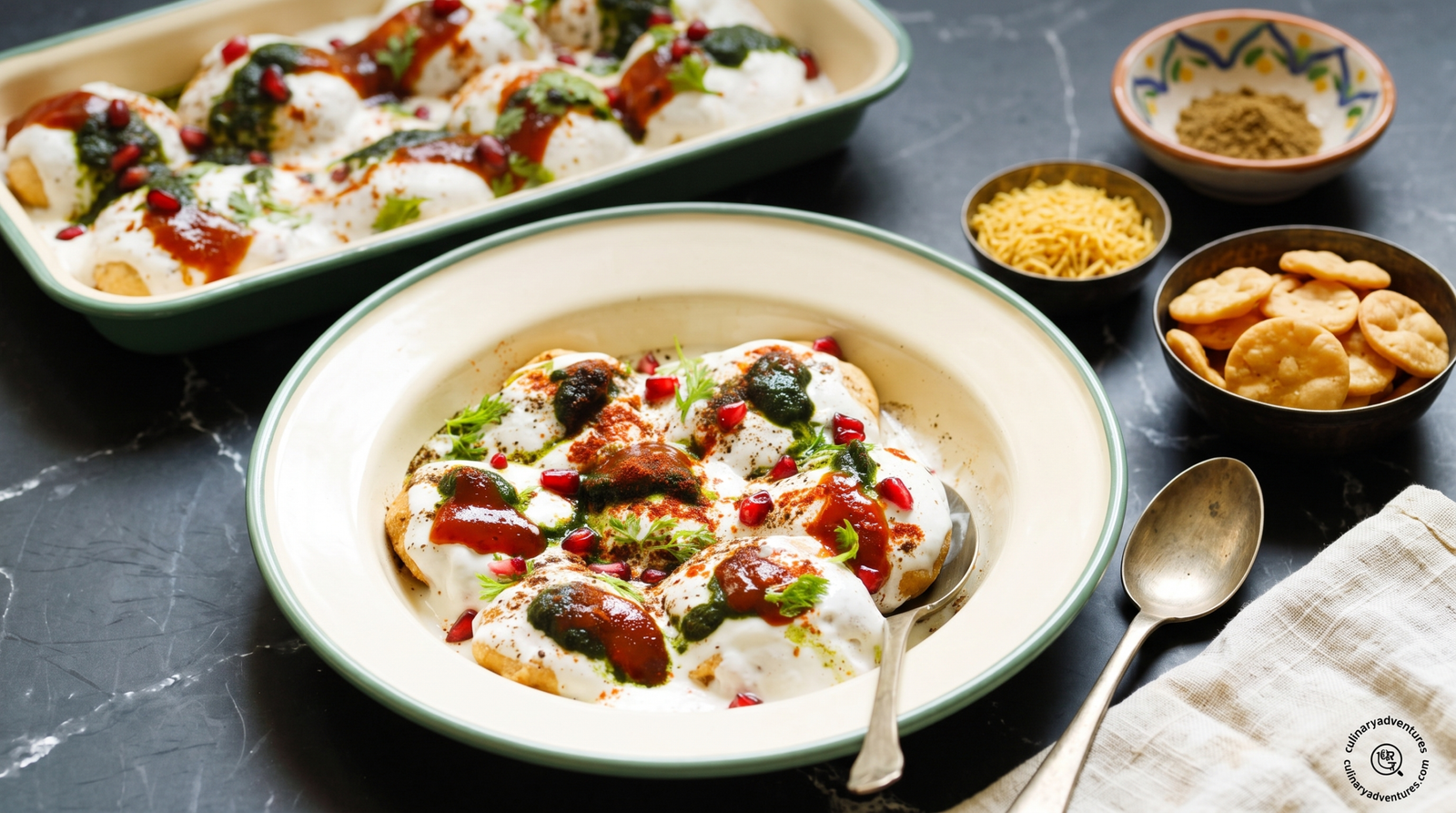
If you are looking for a dahi vada recipe that gives you soft, melt-in-the-mouth vadas covered with creamy yogurt, sweet chutney, green chutney, and aromatic spices, you have come to the right place. Dahi vada is one of those classic Indian chaat recipes that feels special yet is surprisingly easy to make at home.
The combination of crispy lentil vadas soaked in water, chilled whisked curd, tangy chutneys, roasted cumin powder, red chilli powder, and fresh coriander makes every bite incredibly flavorful.
This recipe also includes an easy dahi vada recipe Gujarati style, along with useful tips for making soft vadas, an instant variation, serving ideas, and answers to common questions.
What Is Dahi Vada?
Dahi vada is a popular Indian chaat made by deep-frying a batter prepared mainly from urad dal. The fried vadas are soaked in water until soft, gently squeezed, and then topped with thick yogurt or curd.
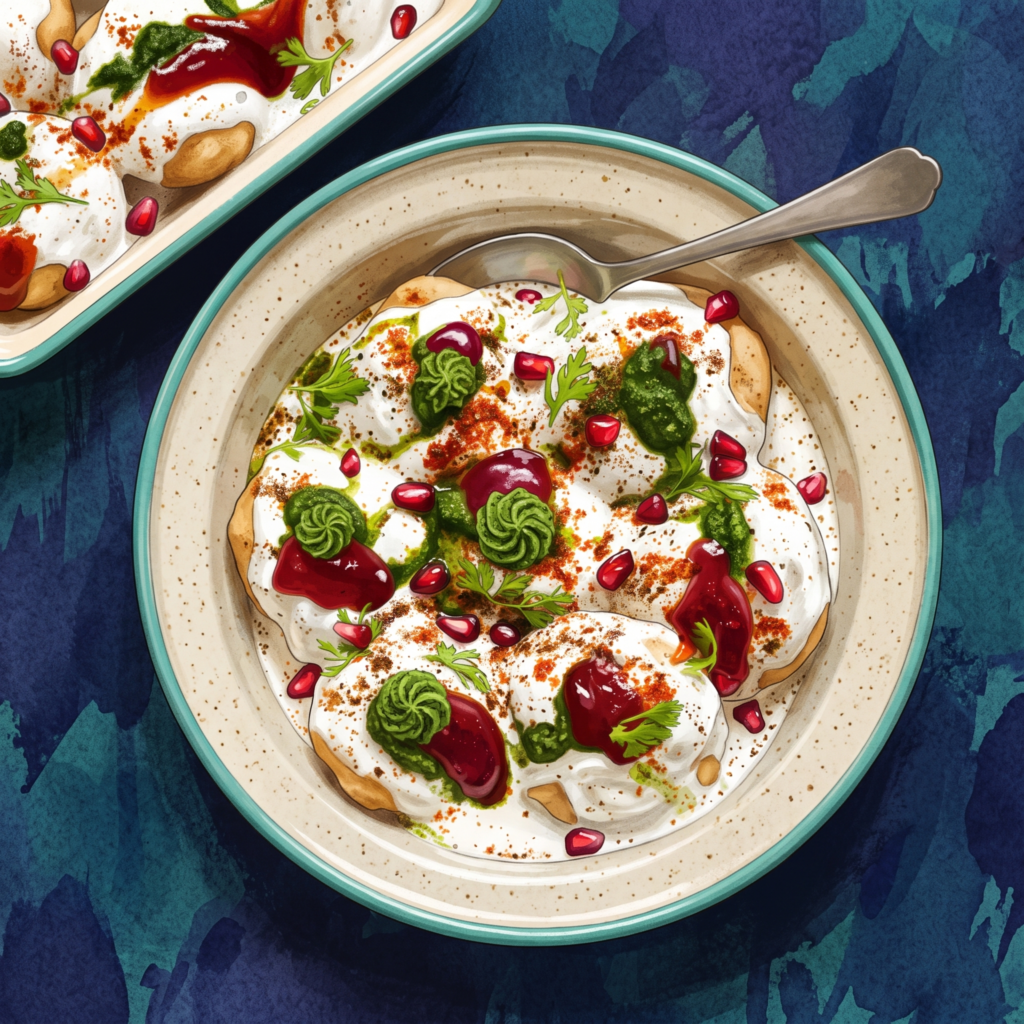
The vadas are finally decorated with sweet tamarind chutney, spicy green chutney, roasted cumin powder, red chilli powder, chaat masala, coriander, and sometimes pomegranate seeds.
The beauty of dahi vada is the contrast of flavors and textures. The vada is soft and fluffy, the yogurt is creamy and cooling, while the chutneys add sweetness, tanginess, and spice.
Dahi Vada Recipe Ingredients
For this dahi vada recipe, you will need simple ingredients that are easily available in most Indian kitchens.
For the Vada
- 1 cup urad dal
- 1–2 green chillies
- 1 inch ginger
- ½ teaspoon cumin seeds
- Salt to taste
- A pinch of hing
- Oil for deep frying
- Water as required
For the Dahi Mixture
- 3 cups thick fresh curd
- 1–2 tablespoons powdered sugar
- Salt to taste
For Topping
- Sweet tamarind-date chutney
- Green coriander-mint chutney
- Roasted cumin powder
- Red chilli powder
- Chaat masala
- Fresh coriander
- Pomegranate seeds, optional
- Sev, optional
How to Make Dahi Vada Recipe
Step 1: Soak the Urad Dal
Wash the urad dal thoroughly under running water until the water becomes relatively clear. Soak it in enough water for around 4–6 hours or overnight.
Once soaked, drain the water completely.
Step 2: Prepare the Vada Batter
Add the soaked dal to a blender along with ginger and green chillies. Add very little water and grind it into a smooth, thick batter.
Avoid adding too much water while grinding because a thin batter can make the vadas difficult to shape and fry properly.
Transfer the batter to a bowl.
A Simple Trick for Fluffy Vadas
Whisk the batter vigorously with your hand or a spoon for a few minutes. This incorporates air into the mixture and helps make the vadas lighter and softer.
To check the consistency, drop a small amount of batter into a bowl of water. If it floats, the batter is usually ready for frying.
Step 3: Add Seasoning
Add salt, cumin seeds, and a pinch of hing to the batter. Mix everything well.
You can also add finely chopped coriander or green chilli if you enjoy a little extra flavor.
Step 4: Fry the Vadas
Heat oil in a deep kadai over medium heat.
Wet your hands with water and take a small portion of batter. Shape it into a round vada and carefully slide it into the hot oil.
Fry a few vadas at a time without overcrowding the kadai.
Cook them over medium heat until they become golden and evenly cooked from the inside.
Remove the vadas using a slotted spoon and place them on a plate lined with paper towels.
How to Soak Dahi Vada
This is one of the most important steps for making soft dahi vada.
Step 5: Soak the Fried Vadas
Take warm water in a large bowl. You can add a small amount of salt to the water if desired.
Place the freshly fried vadas into the water and let them soak for approximately 15–20 minutes.
Once the vadas have softened, take one at a time and gently press it between your palms to remove excess water.
Do not squeeze them too aggressively, as this can break the vadas.
Preparing the Yogurt
Step 6: Whisk the Curd
Take thick, chilled curd in a bowl and whisk it until completely smooth.
Add powdered sugar and a little salt according to taste.
If your curd is extremely thick, add one or two tablespoons of water or milk to achieve a smooth, pourable consistency.
The yogurt should be creamy rather than watery.
Assembling the Dahi Vada
Step 7: Add Yogurt and Chutneys
Arrange the softened vadas in a serving dish.
Pour plenty of whisked yogurt over them so that the vadas are nicely covered.
Now drizzle sweet tamarind-date chutney and green chutney over the top.
Sprinkle roasted cumin powder, red chilli powder, and chaat masala.
Finish with freshly chopped coriander and pomegranate seeds.
Your homemade dahi vada recipe is ready to serve!
Dahi Vada Recipe Gujarati Style
A dahi vada recipe Gujarati style is often enjoyed with a slightly sweeter and milder flavor profile.
To give your dahi vada a Gujarati touch, add a little extra powdered sugar to the yogurt. The combination of sweetened curd and tangy-sweet tamarind chutney creates the familiar Gujarati-style balance of sweet, sour, and spicy flavors.
You can also prepare a slightly sweet tamarind-date chutney and generously drizzle it over the vadas.
For an attractive presentation, garnish with coriander and pomegranate seeds.
Tips for Soft and Fluffy Dahi Vada
Use Fresh Urad Dal
Good-quality urad dal makes a noticeable difference. Older dal may not give you the same soft and fluffy texture.
Do Not Make the Batter Watery
A thick batter is easier to shape and produces better vadas. Add water little by little while grinding.
Beat the Batter Well
Whisking the batter introduces air and helps create lighter vadas.
Maintain Medium Heat
If the oil is extremely hot, the vadas may brown quickly while remaining uncooked inside. If the oil is too cool, they may absorb excess oil.
Soak the Vadas Properly
Give the fried vadas enough time to soften in warm water. This allows them to absorb the yogurt and chutneys beautifully.
Use Thick Yogurt
Thin yogurt can make the dish watery. Thick, creamy curd gives dahi vada a much better texture.
Instant Dahi Vada Recipe
If you want dahi vada recipe instant without soaking and grinding urad dal, you can prepare a quick version using ready-made ingredients.
Bread dahi vada is one convenient option. Remove the edges from bread slices, flatten them gently, fill or shape them as desired, and briefly moisten them before arranging them with sweetened yogurt and chutneys.
Another shortcut is to use ready-made vadas available from a trusted source. Soak them in warm water, gently squeeze out the excess water, and assemble them with yogurt and chutneys.
Although the traditional urad dal version has the most authentic texture, an instant version is useful when you need a quick snack for unexpected guests.
How to Serve Dahi Vada
Dahi vada tastes best when served chilled or slightly cool.
You can serve it as:
- An evening chaat
- A festive appetizer
- A party snack
- A Holi or Diwali special
- A weekend family treat
- A side dish with an Indian meal
For parties, prepare the vadas and yogurt ahead of time and assemble them shortly before serving.


Common Mistakes to Avoid
Adding Too Much Water
Too much water while grinding the dal results in a loose batter and flat vadas.
Overcrowding the Pan
Frying too many vadas at once lowers the oil temperature and can result in greasy vadas.
Using Sour Yogurt
Very sour curd can overpower the delicate flavors of the dish. Fresh yogurt works best.
Skipping the Soaking Step
The soaking process is essential because it transforms crispy fried vadas into soft, juicy dahi vadas.
Storage Tips
You can prepare the fried vadas ahead of time and store them in the refrigerator for a short period.
For the best texture, soak the vadas and add yogurt and chutneys closer to serving time.
Once assembled with yogurt and chutneys, dahi vada is best enjoyed fresh. If refrigerated, consume it promptly and keep it properly covered.
Why You’ll Love This Dahi Vada Recipe
This homemade dahi vada recipe in English is perfect if you want a restaurant-style chaat without complicated ingredients.
The vadas are soft, the yogurt is creamy, and the combination of chutneys and spices gives every bite a wonderful balance of sweet, spicy, tangy, and savory flavors.
Whether you are preparing it for a festival, family gathering, or simply craving something delicious, dahi vada is always a crowd-pleaser.
Frequently Asked Questions About Dahi Vada
1. What dal is used for dahi vada?
Urad dal, also known as split black gram, is traditionally used to prepare dahi vada. It gives the vadas their characteristic soft and fluffy texture.
2. How long should urad dal be soaked for dahi vada?
Urad dal should generally be soaked for around 4–6 hours or overnight. Proper soaking helps the dal grind smoothly and produces softer vadas.
3. Why are my dahi vadas hard?
Hard dahi vadas can happen because the batter was not properly whipped, the batter was too thick, the oil temperature was incorrect, or the vadas were not soaked long enough.
4. How can I make dahi vada soft?
Use properly soaked urad dal, grind it into a thick and smooth batter, whisk the batter well, fry at medium heat, and soak the fried vadas in warm water before adding yogurt.
5. Can I make dahi vada without urad dal?
Yes. For an instant dahi vada recipe, you can use bread or ready-made vadas as a shortcut. However, traditional dahi vada is made with urad dal.
6. Can I prepare dahi vada in advance?
Yes. The vadas can be prepared in advance. For the best results, keep the vadas and yogurt separately and assemble the dish closer to serving time.
7. Which chutney is used in dahi vada?
Dahi vada is traditionally served with sweet tamarind-date chutney and spicy green coriander-mint chutney. Both chutneys create a delicious sweet and tangy balance.
8. Can I use Greek yogurt for dahi vada?
Yes, Greek yogurt can be used. If it is too thick, whisk it with a small amount of water or milk until it reaches a smooth, creamy consistency.
9. What does “dahi vada recipe lyrics” mean?
“Dahi vada recipe lyrics” is sometimes used as a search phrase by people looking for a video, song, or audio-style recipe presentation. There are no traditional “lyrics” required for making dahi vada; the actual recipe involves preparing urad dal vadas, soaking them, and serving them with yogurt and chutneys.
10. How is Gujarati-style dahi vada different?
Gujarati-style dahi vada often has a slightly sweeter taste. Sweetened yogurt and sweet-tangy tamarind chutney are commonly used to create the characteristic Gujarati balance of flavors.
Conclusion:
A good dahi vada recipe is all about getting the texture right. Soft urad dal vadas, creamy yogurt, sweet tamarind chutney, spicy green chutney, and aromatic spices come together to create one of India’s most loved chaats.
If you are making it for the first time, pay special attention to the batter consistency, frying temperature, and soaking process. Once you get these three steps right, making delicious homemade dahi vada becomes surprisingly easy.
Try this recipe for your next family gathering, festival, or weekend chaat craving, and garnish it generously with chutneys, coriander, roasted cumin powder, and pomegranate seeds for a beautiful restaurant-style finish.