
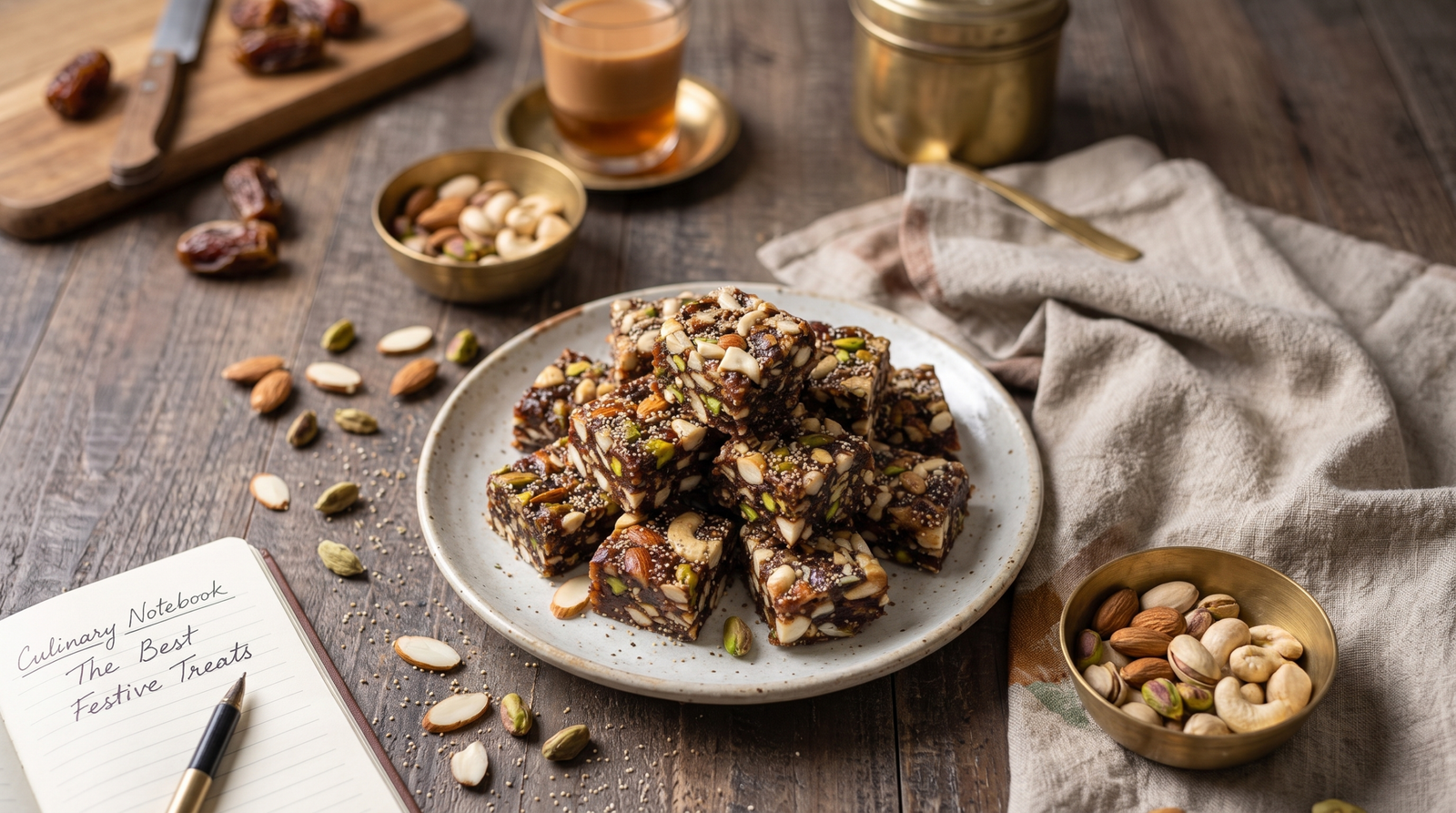
Khajur Paak recipe is a delicious, traditional Indian sweet made with dates, jaggery, and a generous mixture of dry fruits and nuts. It is naturally rich, chewy, nutty, and full of flavour. This sweet is especially popular during winter because it is prepared with nutritious ingredients like dates, almonds, cashews, pistachios, and edible seeds.
If you are looking for an easy khajur paak recipe, you are in the right place! This homemade recipe requires simple ingredients and does not need complicated cooking techniques. The best part is that you can prepare khajur pak without mawa, making it a convenient sweet for festivals, family gatherings, and special occasions.
In this article, I will share a simple khajur pak recipe with jaggery that gives you perfectly set, soft, chewy, and delicious pieces. Whether you are searching for khajur pak recipe in English, khajur pak recipe in Hindi, or khajur pak recipe Gujarati style, this step-by-step guide will help you make it easily at home.
What Is Khajur Paak?
Khajur Paak is a traditional Indian dry fruit sweet prepared mainly using dates (khajur), nuts, jaggery, and aromatic ingredients. The dates provide natural sweetness and help bind all the ingredients together.
Unlike many traditional Indian sweets, this recipe does not require mawa, milk powder, or refined sugar. Jaggery adds a lovely caramel-like flavour, while roasted nuts provide a crunchy texture.
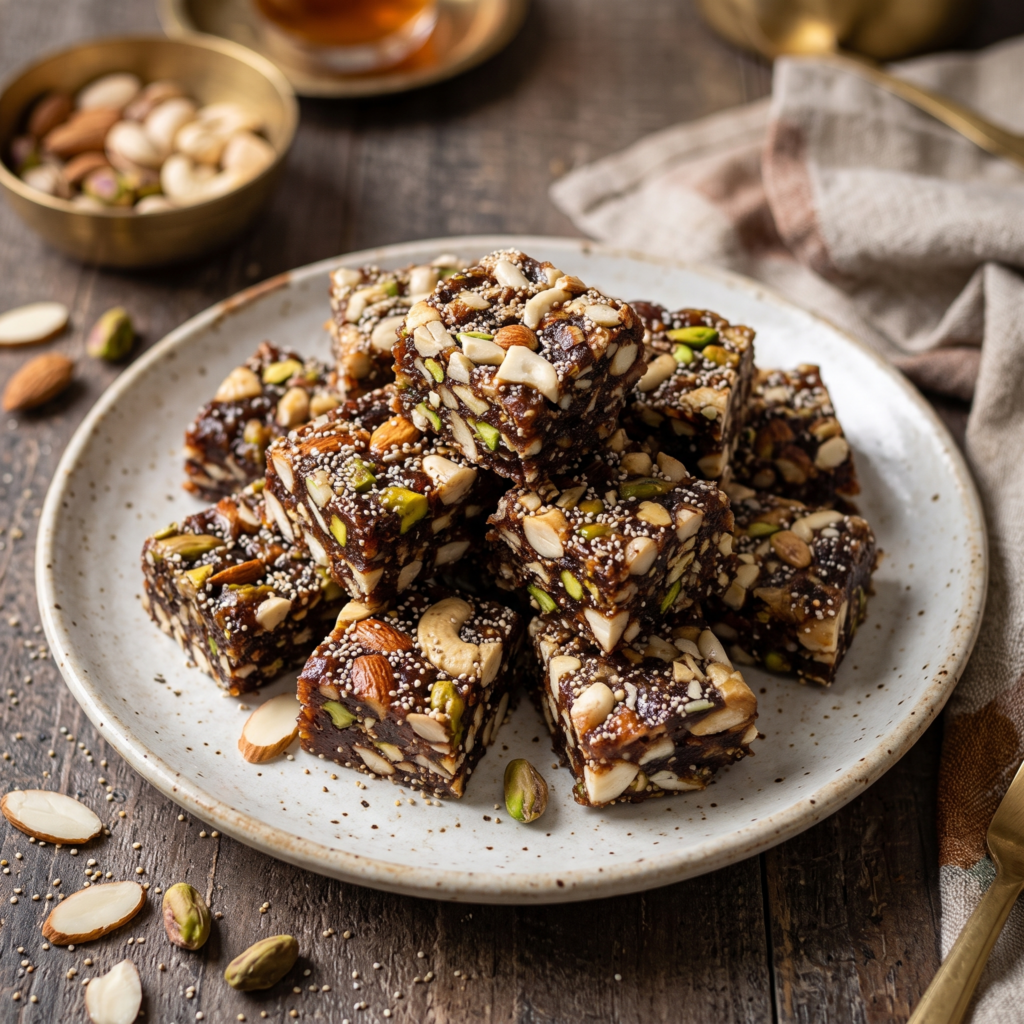
Khajur Paak is generally prepared during winter, Diwali, and other festive occasions. It is cut into small squares or diamond-shaped pieces and served as a delicious homemade sweet.
Why You Will Love This Khajur Paak Recipe
Here are some reasons why you should try this easy khajur paak recipe at home:
- Easy to prepare: You only need basic cooking skills and simple ingredients.
- Without mawa: This recipe does not require khoya or mawa.
- Jaggery sweetness: Jaggery gives the sweet a rich and traditional taste.
- Loaded with dry fruits: Almonds, cashews, pistachios, and seeds make every bite delicious.
- Perfect for festivals: Serve it during Diwali, Uttarayan, weddings, and family celebrations.
- Make-ahead sweet: You can prepare it in advance and store it in an airtight container.
Khajur Paak Recipe Ingredients
The ingredients for this khajur pak recipe are easily available in Indian kitchens. Use good-quality soft dates and fresh dry fruits for the best results.
Main Ingredients
| Ingredients | Quantity |
|---|---|
| Seedless dates (khajur) | 2 cups |
| Jaggery (gud) | ½ cup |
| Almonds (badam) | ¼ cup |
| Cashews (kaju) | ¼ cup |
| Pistachios (pista) | 2 tablespoons |
| Desiccated coconut | 2 tablespoons |
| Sesame seeds (til) | 2 tablespoons |
| Ghee | 3 tablespoons |
| Cardamom powder | ½ teaspoon |
| Dry ginger powder | ¼ teaspoon |
Optional ingredients: You can also add walnuts, raisins, poppy seeds, or edible gum (gond) according to your taste.
How to Make Khajur Paak Recipe Step by Step
Follow these simple steps to prepare delicious homemade khajur paak. The most important thing is to cook the dates and jaggery mixture on low heat so that it does not burn.
Step 1: Prepare the Dates
First, take 2 cups of seedless dates. Check carefully that all the seeds have been removed.
- Chop the dates into small pieces.
- If your dates are hard, soak them in warm water for 10 minutes.
- Drain the water completely before using.
- Mash or grind the dates into a coarse paste.
Soft dates make the mixture easier to cook and help bind the dry fruits properly.
Step 2: Roast the Dry Fruits
Take almonds, cashews, and pistachios. Chop them into small pieces.
- Heat 1 tablespoon of ghee in a kadai.
- Add chopped almonds and roast until lightly golden.
- Add cashews and pistachios.
- Roast everything on low flame until aromatic.
- Remove the roasted nuts and keep them aside.
You can also roast walnuts and other nuts if you like extra crunch.
Step 3: Roast the Seeds
In the same kadai, add sesame seeds and roast them on low flame until they become aromatic.
If you are adding poppy seeds or edible gum, roast them separately.
Keep the roasted seeds aside.
Step 4: Prepare the Jaggery Mixture
Now heat 1 tablespoon of ghee in a heavy-bottomed kadai.
- Add grated or chopped jaggery.
- Add 1–2 tablespoons of water if needed.
- Stir continuously until the jaggery melts.
- Keep the flame low to prevent burning.
You do not need to make a hard jaggery syrup. A smooth melted mixture is sufficient for this recipe.
Step 5: Add Dates
Add the prepared dates paste to the melted jaggery.
Mix everything properly using a spatula.
Cook for approximately 5–7 minutes on low flame. Keep stirring until the mixture becomes thick and starts leaving the sides of the kadai.
Step 6: Add Dry Fruits and Flavouring
Now add the roasted almonds, cashews, pistachios, sesame seeds, and desiccated coconut.
Add cardamom powder and dry ginger powder.
Mix everything until the nuts and seeds are evenly distributed throughout the dates mixture.
If the mixture looks too thick, add a little ghee to make it easier to mix.
Step 7: Set the Khajur Paak
Grease a plate or square tray with ghee.
Transfer the prepared khajur paak mixture into the tray.
- Spread it evenly using a spatula.
- Press gently to make a smooth surface.
- Sprinkle some chopped pistachios and almonds on top.
- Allow it to cool completely at room temperature.
Step 8: Cut and Serve
Once the mixture has completely cooled and set, cut it into square or diamond-shaped pieces.
Your delicious homemade khajur paak is ready to serve!
Enjoy this rich and flavourful sweet with your family or store it in an airtight container for later.
Khajur Pak Recipe Without Mawa
Many people prefer making sweets without mawa because it is easier to store and requires fewer ingredients. This khajur pak recipe without mawa is a wonderful option for anyone who wants a delicious homemade dry fruit sweet.
The natural stickiness of dates works as a binding ingredient, so you do not need khoya or mawa.
Important tips for making khajur pak without mawa:
- Always choose soft and fresh dates.
- Remove all seeds before grinding.
- Roast the nuts properly to improve their flavour.
- Cook the dates mixture until it becomes thick.
- Do not add too much water while melting jaggery.
- Allow the mixture to cool completely before cutting.
The result is a delicious, chewy, nutty sweet that holds its shape beautifully without using mawa.
Khajur Paak Recipe with Jaggery – Important Tips
If you want perfectly shaped and tasty khajur paak, keep these tips in mind.
1. Choose Good-Quality Dates
Use soft, naturally sweet dates. Hard dates can make the mixture difficult to prepare and may affect the final texture.
2. Roast the Dry Fruits
Always roast dry fruits in a little ghee. This improves their aroma and gives your khajur paak a wonderful flavour.
3. Use Fresh Jaggery
Choose good-quality jaggery without impurities. If necessary, melt and strain it before adding it to the dates.
4. Cook on Low Flame
High heat can burn the jaggery and dates mixture. Always cook on low flame and stir continuously.
5. Do Not Cut While Hot
Allow the mixture to cool completely before cutting. This helps the pieces maintain their shape.
Gujarati Khajur Paak Recipe – Traditional Serving Ideas
In Gujarati households, homemade sweets are an important part of festivals and celebrations. Khajur paak is a wonderful addition to a traditional Gujarati sweet platter.
You can serve it during:
- Diwali celebrations.
- Uttarayan and Makar Sankranti.
- Family gatherings.
- Wedding functions.
- Winter celebrations.
- Special religious occasions.
Cut the paak into small squares and garnish with chopped almonds and pistachios for an attractive presentation.
Storage Tips for Homemade Khajur Paak
Proper storage helps maintain the taste and texture of homemade khajur paak.
- Store completely cooled pieces in an airtight container.
- Keep the container in a cool and dry place.
- Use a clean and dry spoon or hand when handling the sweet.
- Refrigerate if your kitchen is warm or if you want to keep it for longer.
- Always check for changes in smell, taste, or texture before consuming.
Since this recipe contains no mawa, it avoids the additional perishability associated with milk-based ingredients. However, storage life depends on moisture, ingredients, and temperature.
Nutritional Benefits of Khajur Paak
Khajur paak contains several ingredients that provide useful nutrients.
- Dates: Provide dietary fibre and naturally occurring sugars.
- Almonds: Contain healthy fats, vitamin E, and protein.
- Cashews: Provide minerals and healthy fats.
- Pistachios: Contain fibre, protein, and antioxidants.
- Sesame seeds: Provide calcium and healthy fats.
- Jaggery: Provides carbohydrates and small amounts of minerals.
Although these ingredients offer nutritional benefits, khajur paak is still an energy-dense sweet. Enjoy it in moderate portions as part of a balanced diet.
Frequently Asked Questions (FAQs)
1. What is khajur paak made of?
Khajur paak is generally made using seedless dates, jaggery, almonds, cashews, pistachios, sesame seeds, ghee, and cardamom powder. Some variations also include coconut, walnuts, and edible gum.
2. Can I make khajur pak without mawa?
Yes! You can easily make khajur pak without mawa. Dates provide natural stickiness and help bind all the ingredients together. This recipe does not require khoya or milk powder.
3. Can I make khajur pak recipe with jaggery?
Yes, jaggery is an excellent ingredient for making khajur pak. Melt the jaggery on low flame and mix it with the dates paste before adding roasted dry fruits.
4. Which dates are best for khajur paak?
Soft, fresh, seedless dates are best for this recipe. They are easier to chop, grind, and cook, and help create a smooth and chewy texture.
5. Can I make khajur paak without sugar?
Yes. You can skip refined sugar completely. Dates provide natural sweetness, and you can adjust or reduce the jaggery according to your taste.
6. Why is my khajur paak not setting properly?
Khajur paak may not set properly if the mixture contains too much moisture or has not been cooked long enough. Cook it until thick and allow it to cool completely before cutting.
7. Can I add edible gum to khajur pak?
Yes, you can add roasted edible gum (gond) to make the sweet richer and crunchier. Fry the edible gum separately in ghee, crush it, and mix it with the other ingredients.
8. How long can I store homemade khajur paak?
Store khajur paak in an airtight container in a cool, dry place. Refrigeration is recommended in warm weather. Its storage life depends on the moisture content and freshness of the ingredients.
9. Is khajur paak a Gujarati sweet?
Khajur paak is popular in Gujarati households, especially as a homemade dry fruit sweet during winter and festivals. Different Indian regions have their own variations of this dates-based sweet.
10. Can I make khajur pak without jaggery?
Yes. Dates are naturally sweet, so you can prepare khajur pak without adding jaggery. However, the final taste and texture will be slightly different from the jaggery version.
Conclusion:
This easy khajur paak recipe is a wonderful way to prepare a traditional Indian dry fruit sweet at home. Made with dates, jaggery, almonds, cashews, pistachios, and aromatic spices, it is rich, delicious, and full of nutty flavour.
The best thing about this recipe is that you can prepare it without mawa and refined sugar. With simple ingredients and easy cooking steps, even beginners can make perfectly set khajur paak at home.
Whether you are preparing it for Diwali, Uttarayan, winter celebrations, or simply satisfying your sweet cravings, this homemade khajur pak recipe with jaggery is definitely worth trying.
Make this delicious Gujarati-style khajur paak, share it with your loved ones, and enjoy the taste of homemade traditional sweets!