
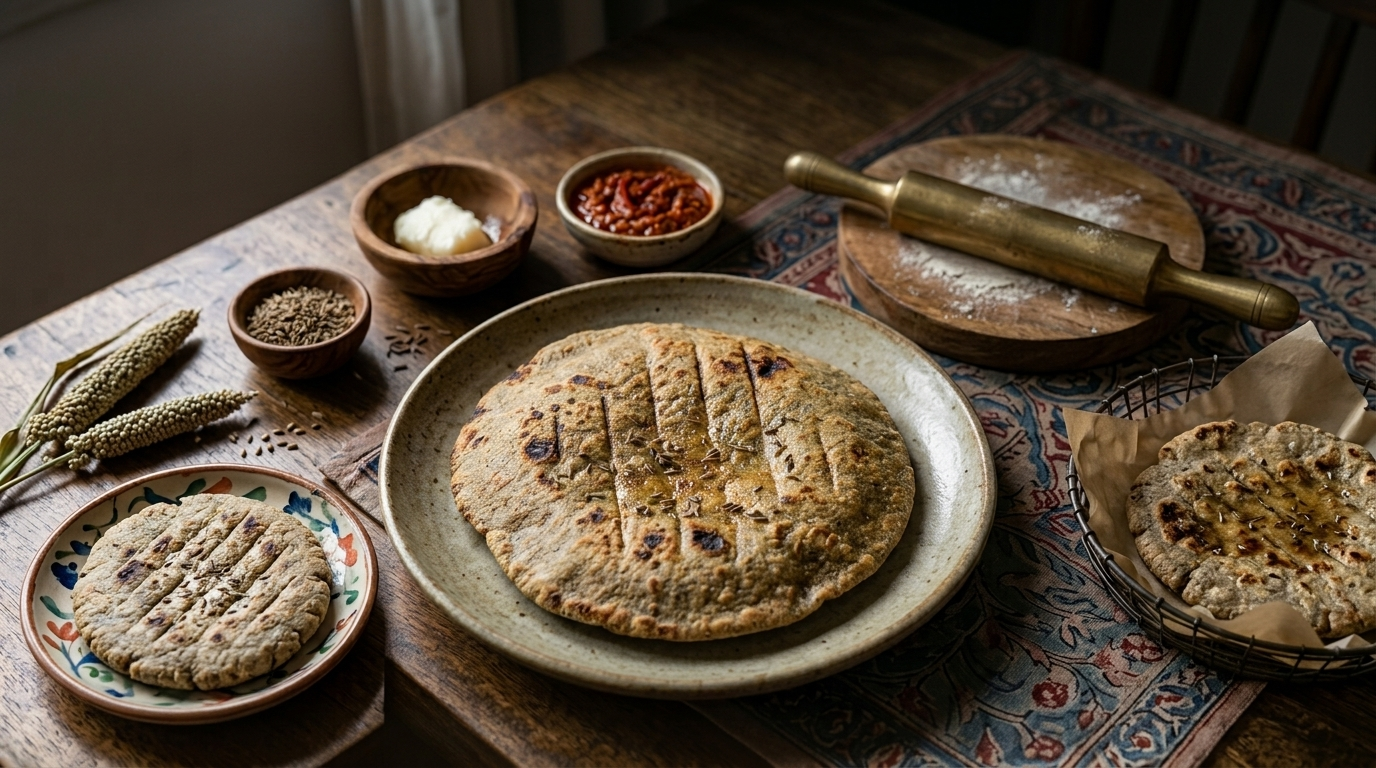
If you love traditional Gujarati food, then bajra rotla recipe is something you must try. Bajra Rotla, also known as Bajra No Rotlo, is a rustic Indian flatbread prepared using pearl millet flour (bajra flour). It is especially popular in Gujarat and Rajasthan during the winter season because it keeps the body warm and provides excellent nutrition.
Served with white butter, jaggery, garlic chutney, baingan bharta, sev tameta nu shaak, or ringna no olo, this wholesome flatbread is simple, filling, and packed with nutrients.
In this detailed guide, you’ll learn the authentic bajra rotla recipe, cooking tips, health benefits, nutrition facts, serving suggestions, and answers to frequently asked questions.
What is Bajra Rotla?
Bajra Rotla is a traditional Indian flatbread made from pearl millet flour (bajra atta). Unlike wheat chapati, it is naturally gluten-free and has a slightly earthy, nutty flavor.
The Kathiyawadi Bajra Rotla is thicker than regular rotis and is cooked slowly on a hot tawa until beautifully roasted. Traditionally, it is finished directly over an open flame to create a smoky aroma.
In Gujarati, it is popularly known as Bajra No Rotlo.
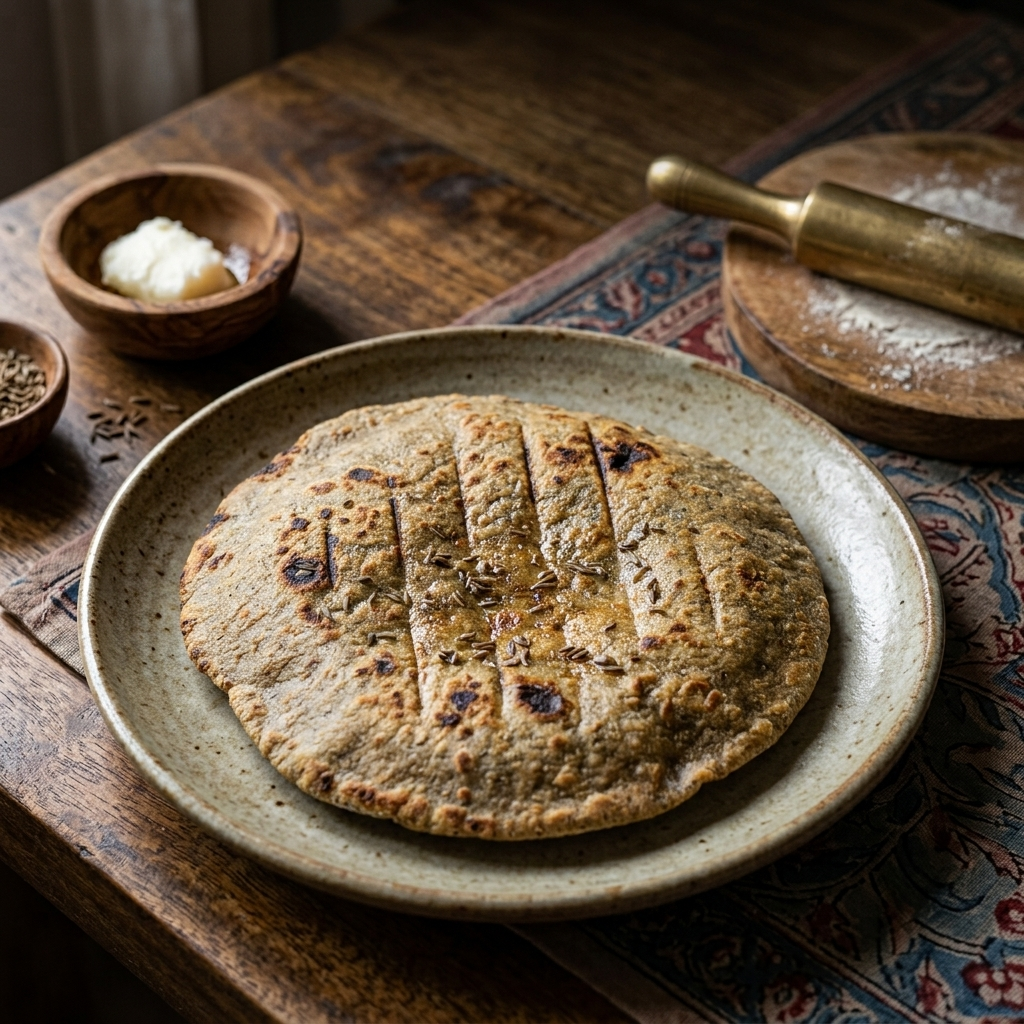
Why You’ll Love This Bajra Rotla Recipe
Soft and Delicious
With the right technique, this recipe produces soft rotlas every time.
Healthy and Nutritious
Rich in fiber, protein, iron, magnesium, and essential minerals.
Naturally Gluten-Free
Perfect for people avoiding wheat.
Easy to Prepare
Requires only two main ingredients.
Perfect Winter Meal
Keeps the body warm and provides lasting energy.
Bajra Rotla Recipe Ingredients
Ingredients
- 2 cups bajra flour (pearl millet flour)
- ¾ to 1 cup warm water (as needed)
- ½ teaspoon salt (optional)
- 1 teaspoon ghee (optional while kneading)
- White butter or ghee for serving
How to Make Bajra Rotla (Step-by-Step)
Step 1: Prepare the Dough
Take fresh bajra flour in a large mixing bowl.
Add salt if using.
Gradually pour warm water while mixing with your fingers.
Knead gently into a soft dough.
Unlike wheat dough, bajra dough should be prepared fresh before cooking.
Cover with a cloth for 5-10 minutes.
Step 2: Divide the Dough
Make medium-sized dough balls.
Keep them covered so they don’t dry out.
Step 3: Shape the Rotla
Dust your hands lightly with dry bajra flour.
Flatten the dough ball gently using your palms.
Continue pressing from the center outward until you get a round rotla about 5-6 inches wide.
You may also use parchment paper or a rolling pin if you’re a beginner.
Step 4: Cook on Tawa
Heat a thick iron tawa.
Place the rotla carefully.
Cook for about 1 minute.
Flip it.
Cook the other side for another minute.
Flip again and gently press using a clean kitchen cloth.
The rotla will puff slightly.
Step 5: Roast on Flame
Transfer directly onto the gas flame.
Roast both sides until small brown spots appear.
Brush generously with ghee or homemade white butter.
Serve hot.
Authentic Kathiyawadi Bajra Rotla
The Kathiyawadi Bajra Rotla is famous across Gujarat for its rustic taste.
It is traditionally served with:
- Ringna No Olo (Smoky Baingan Bharta)
- Garlic Chutney
- White Butter
- Jaggery
- Buttermilk
- Sev Tameta
- Green Chili Pickle
This simple meal is filling, nutritious, and incredibly flavorful.
Bajra Rotla Recipe in Gujarati Style
A traditional Gujarati household follows a few special techniques:
Fresh Flour
Always use freshly milled bajra flour.
Warm Water
Warm water helps bind the dough.
Hand Patting
Most Gujarati home cooks shape the rotla entirely by hand.
Iron Tawa
An iron griddle gives authentic taste and texture.
Finish on Open Flame
This enhances the smoky aroma.
Expert Tips for Soft Bajra Rotla
Use Warm Water
Warm water creates a softer dough.
Prepare Fresh Dough
Never refrigerate bajra dough.
Don’t Add Too Much Water
The dough should remain soft but manageable.
Cook on Medium Heat
High heat may burn the outside while leaving the inside uncooked.
Serve Immediately
Freshly cooked rotlas taste the best.
Bajra No Rotlo Benefits
Bajra has been part of Indian diets for centuries due to its incredible nutritional value.
Rich in Fiber
Supports digestion and promotes gut health.
High in Protein
Helps maintain muscles and keeps you fuller for longer.
Diabetic-Friendly
Has a lower glycemic index compared to refined flour.
Heart Healthy
Contains magnesium and potassium that support heart health.
Weight Management
Keeps hunger under control due to high fiber.
Gluten-Free
Suitable for people with gluten intolerance.
Energy Booster
Provides slow-releasing carbohydrates for sustained energy.
Bajra Rotla Nutrition
Approximate nutrition per medium rotla:
| Nutrient | Amount |
|---|---|
| Calories | 180 kcal |
| Protein | 5-6 g |
| Carbohydrates | 35 g |
| Fiber | 6 g |
| Fat | 2 g |
| Iron | 8% DV |
| Calcium | 3% DV |
| Magnesium | High |
| Potassium | Moderate |
Actual values vary depending on size and added ghee.
Bajra Rotla Protein
Many people search for Bajra Rotla Protein because it is an excellent plant-based food.
A medium-sized bajra rotla contains approximately 5 to 6 grams of protein.
Pair it with:
- Dal
- Curd
- Paneer
- Sprouts
- Beans
to create a balanced, protein-rich meal.
Serving Suggestions
Bajra Rotla tastes amazing with:
- White butter
- Homemade ghee
- Jaggery
- Garlic chutney
- Ringna No Olo
- Baingan Bharta
- Sev Tameta
- Yogurt
- Kadhi
- Green chili pickle
Common Mistakes to Avoid
Using Cold Water
Always use warm water.
Rolling Too Thin
Rotlas should be thicker than wheat rotis.
Cooking on Very High Flame
Medium heat gives the best texture.
Dry Dough
Keep the dough soft.
Making Dough in Advance
Fresh dough always gives better results.
Storage Tips
Although Bajra Rotla tastes best fresh:
- Store in an airtight container for up to 24 hours.
- Reheat on a hot tawa before serving.
- Apply ghee after reheating to restore softness.
Frequently Asked Questions (FAQs)
1. What is Bajra Rotla?
Bajra Rotla is a traditional Gujarati flatbread made from pearl millet flour.
2. Is Bajra Rotla gluten-free?
Yes. Bajra is naturally gluten-free.
3. Why does my Bajra Rotla break?
The dough may be too dry. Use warm water and knead until soft.
4. Can I make Bajra Rotla without ghee?
Yes. Ghee is optional and mainly enhances flavor.
5. Is Bajra Rotla healthy?
Yes. It is rich in fiber, protein, minerals, and antioxidants.
6. Can diabetics eat Bajra Rotla?
Yes. Bajra generally has a lower glycemic index than refined flour, making it a good option when eaten in appropriate portions as part of a balanced diet.
7. How much protein is in Bajra Rotla?
One medium rotla contains approximately 5–6 grams of protein.
8. Which flour is used for Bajra Rotla?
Pearl millet flour (bajra atta).
9. What goes best with Bajra Rotla?
White butter, jaggery, garlic chutney, baingan bharta, sev tameta, kadhi, and buttermilk are classic accompaniments.
10. Can I store Bajra Rotla?
Yes, but it tastes best fresh. You can store it in an airtight container for one day and reheat before serving.
Conclusion:
This authentic bajra rotla recipe is a timeless Gujarati classic that combines simplicity, flavor, and exceptional nutrition. Whether you’re looking for a wholesome family dinner, a gluten-free flatbread, or a traditional Kathiyawadi Bajra Rotla, this recipe delivers soft, flavorful results every time.
With its impressive nutritional profile, rich fiber content, and satisfying taste, Bajra No Rotlo deserves a place in every healthy Indian kitchen. Pair it with homemade white butter, jaggery, garlic chutney, or smoky baingan bharta for an unforgettable meal that celebrates the essence of traditional Gujarati cuisine.