
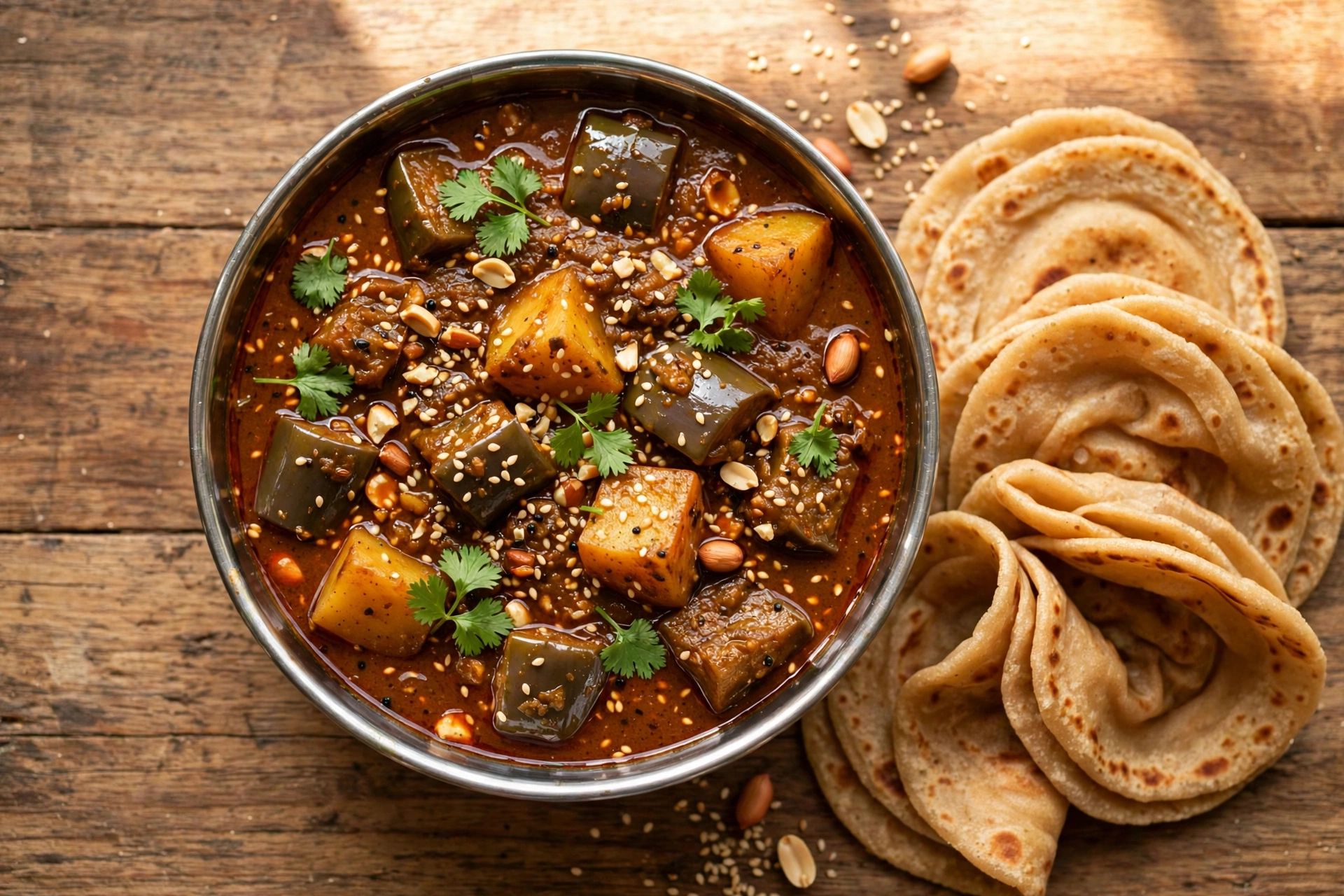
Ringan bateta nu shaak is the everyday Gujarati curry of brinjal (ringan) and potato (bateta), cooked in a mildly sweet, tangy tomato masala with peanuts, sesame, and coconut. It tastes soft and comforting — the brinjal melts into the gravy, the potato holds its shape, and the jaggery and lemon give it that gentle sweet-sour balance Gujarati food is known for. It is the curry Gujarati families cook most often, on busy weeknights and in Sunday thalis alike.
This recipe works because the brinjal and potato are cooked together in one pot, so the brinjal breaks down and thickens the gravy naturally, and because the peanut-sesame-coconut masala is added at the end, keeping its fresh, nutty flavour. It needs no onion or garlic if you prefer, it is ready in under 40 minutes, and it goes with everything from rotli to thepla. It is perfect for beginners and for anyone who wants a real, homely Gujarati shaak.
Ringan Bateta nu Shaak
Ingredients
- 4 Small brinjals (ringan) about 250 g
- 2 medium Potatoes (bateta) about 250 g
- 2 medium Tomatoes chopped
- 1 small Onion finely chopped (optional)
- 1 teaspoon Ginger grated
- 2 Green chillies slit lengthwise
- 2 tablespoons Roasted peanuts coarsely crushed
- 1 tablespoon Sesame seeds
- 2 tablespoons Grated coconut
- 1/2 teaspoon Mustard seeds
- 1/2 teaspoon Cumin seeds
- Hing (asafoetida) a pinch
- 6–8 Curry leaves
- 1/2 teaspoon Turmeric powder
- 1 teaspoon Red chilli powder
- 1 teaspoon Coriander powder
- 1/2 teaspoon Cumin powder
- 1/2 teaspoon Garam masala
- 1 teaspoon Jaggery grated
- 1 teaspoon Lemon juice
- 2 tablespoons Fresh coriander leaves chopped
- 2 tablespoons Oil
- Salt to taste
- 1 cup Water 240 ml
Instructions
- Cut the brinjals and potatoes into chunks and soak the brinjals in salted water.
- Heat oil, add mustard seeds, cumin seeds, hing, and curry leaves, then ginger and green chillies.
- Add onion and tomato and cook until soft, then add the dry spices.
- Add the potatoes, water, and salt, and cook for 8–10 minutes.
- Add the brinjals and the peanut-sesame-coconut masala, cover, and cook for 10–12 minutes until soft.
- Add jaggery, lemon juice, and garam masala, garnish with coriander, and serve hot.
Notes
Ingredients
| Ingredient | Quantity |
|---|---|
| Small brinjals (ringan) | 4 (about 250 g) |
| Potatoes (bateta) | 2 medium (about 250 g) |
| Tomatoes | 2 medium, chopped |
| Onion | 1 small, finely chopped (optional) |
| Ginger | 1 teaspoon, grated |
| Green chillies | 2, slit lengthwise |
| Roasted peanuts | 2 tablespoons, coarsely crushed |
| Sesame seeds | 1 tablespoon |
| Grated coconut | 2 tablespoons |
| Mustard seeds | 1/2 teaspoon |
| Cumin seeds | 1/2 teaspoon |
| Hing (asafoetida) | A pinch |
| Curry leaves | 6–8 |
| Turmeric powder | 1/2 teaspoon |
| Red chilli powder | 1 teaspoon |
| Coriander powder | 1 teaspoon |
| Cumin powder | 1/2 teaspoon |
| Garam masala | 1/2 teaspoon |
| Jaggery | 1 teaspoon, grated |
| Lemon juice | 1 teaspoon |
| Fresh coriander leaves | 2 tablespoons, chopped |
| Oil | 2 tablespoons |
| Salt | To taste |
| Water | 1 cup (240 ml) |
Optional ingredients: 1/2 teaspoon of sugar instead of jaggery, 1 tablespoon of fresh cream for a richer gravy, a few pieces of surti papdi in winter.
How to Make Ringan Bateta nu Shaak
Step 1: Prepare the Vegetables
Wash the brinjals and cut them into 1-inch chunks, keeping the pieces large so they do not melt away. Drop them into a bowl of salted water straight away, or they will turn brown. Peel the potatoes and cut them into similar 1-inch chunks. Chop the tomatoes and the onion, if using.
Step 2: Make the Peanut-Sesame Masala
Dry-roast the sesame seeds in a small pan for 1 minute until they pop lightly. Put them in a mixer jar with the roasted peanuts and grated coconut and grind into a coarse powder. Do not grind it smooth — a little texture is what gives the shaak its body. Keep aside.
Step 3: Temper the Oil
Heat the oil in a kadhai on medium flame. Add the mustard seeds and let them crackle, then add the cumin seeds, a pinch of hing, and the curry leaves. Add the grated ginger and slit green chillies and fry for 30 seconds until fragrant.
Step 4: Cook the Tomato Base
Add the onion and cook for 2–3 minutes until soft and pink. Add the chopped tomatoes and cook for 4–5 minutes until they turn soft and the oil starts to leave the sides. Add turmeric powder, red chilli powder, coriander powder, and cumin powder, and fry for 1 minute more.
Step 5: Add the Potatoes
Add the potato chunks, 1 cup of water, and salt. Stir, cover, and cook on a medium flame for 8–10 minutes until the potatoes are half-cooked. They should still be firm when pierced with a knife.
Step 6: Add Brinjal and Finish
Drain the brinjals and add them to the kadhai along with the peanut-sesame-coconut masala. Stir gently, cover, and cook on a low flame for 10–12 minutes until the brinjal is soft and the gravy has thickened. Add the jaggery, lemon juice, and garam masala, and cook for 2 more minutes. Garnish with fresh coriander leaves and serve hot with rotli or thepla.
What is Ringan Bateta nu Shaak?
Ringan bateta nu shaak is the most cooked curry in Gujarati homes — brinjal and potato in a tomato-based masala, finished with the sweet-sour balance that defines Gujarati cooking. “Ringan” is brinjal and “bateta” is potato in Gujarati, and the two vegetables are cooked together so often that the dish is almost a shorthand for a home-cooked Gujarati dinner. It appears in everyday thalis, in tiffin boxes, and at festivals, always with rotli, and always with a little jaggery to round off the taste.
Tips for Perfect Ringan Bateta nu Shaak
- Choose small, firm brinjals. Big, soft brinjals have too many seeds and turn mushy in the curry.
- Soak the cut brinjal in salted water until you use it. It stops the pieces turning brown and removes a little bitterness.
- Cut the potato and brinjal in similar sizes. Even pieces cook evenly and look better in the bowl.
- Do not skip the peanut-sesame-coconut masala. It is what makes this shaak Gujarati instead of just any brinjal-potato curry.
- Cook the potatoes first, then the brinjal. Brinjal cooks much faster than potato — adding them together leaves the brinjal mushy and the potato hard.
- Add the jaggery at the end. Adding it early can make the tomatoes taste flat.
- Keep the flame low after adding the brinjal. Gentle heat lets the brinjal soften without falling apart.
Variations
Jain Ringan Bateta nu Shaak: Skip the onion, ginger, and garlic. The tomato, peanut, and sesame masala still give plenty of flavour, and the dish stays true to Jain cooking.
Stuffed (Bharela) Ringan Bateta: Stuff the brinjals with the peanut-sesame-coconut masala before cooking, and keep the potatoes in the gravy. It takes a little longer, but it is the festive version of the same dish.
No-Onion Version: Simply leave the onion out. The tomato base and the nutty masala carry the flavour on their own — many Gujarati homes cook it this way every day.
Spicy Version: Add 1 more green chilli and 1/2 teaspoon of extra red chilli powder. Balance the heat with a little more jaggery.
With Surti Papdi: In winter, add a handful of surti papdi with the brinjal. It is the seasonal version, and it goes beautifully with Undhiyu on the same table.
What to Serve with Ringan Bateta nu Shaak
Serve ringan bateta nu shaak with:
- Rotli — soft Gujarati phulka, the everyday partner for this shaak
- Thepla — for a tiffin or travel meal
- Jowar Rotla — the classic winter pairing, especially with a little white butter
- Bajra Rotla — another winter flatbread that suits this curry
- Gujarati kadhi — a light, sweet kadhi to balance the shaak
- Dal Dhokli — serve both together for a full Gujarati dinner
Storage Tips
- Room temperature: Best eaten fresh on the same day. Keep covered for up to 4–5 hours.
- Fridge: Store in an airtight container for up to 2 days. The flavours deepen overnight.
- Freezer: Freeze for up to 1 month, but the brinjal may turn softer after thawing. Freeze the curry without the garnish.
- Reheating: Warm gently in a pan on a low flame with a splash of water. Do not boil hard, or the brinjal will break apart.
Nutrition
| Nutrient | Amount (approx. per serving) |
|---|---|
| Calories | 190 kcal |
| Protein | 5 g |
| Carbohydrates | 24 g |
| Fat | 9 g |
| Fibre | 6 g |
Brinjal is low in calories and high in fibre, and potato gives slow, filling energy. The peanuts and sesame add healthy fats and a little protein, while the tomato base adds vitamin C. It is a light, everyday curry that fills you up without feeling heavy.
Frequently Asked Questions (FAQs)
1. Why does my brinjal turn brown after cutting?
Brinjal oxidises quickly in air. Drop the cut pieces into salted water straight away and keep them there until they go into the kadhai.
2. Why is my ringan bateta nu shaak bitter?
The brinjals may have been old, or the seeds were too many. Choose small, firm, shiny brinjals, and soak them in salted water before cooking. A little extra jaggery also balances any bitterness.
3. Can I make this shaak without onion and garlic?
Yes. Many Gujarati homes cook it without onion every day. Skip the onion and keep everything else the same — the tomato and peanut-sesame masala carry the flavour.
4. Can I make ringan bateta nu shaak in a pressure cooker?
Yes. Cook the potatoes for 1 whistle first, then add the brinjals and the masala and cook for 1 more whistle on low flame. Let the pressure release naturally so the brinjal does not turn to mush.
5. Is ringan bateta nu shaak vegan?
Yes, if you use oil instead of ghee. The recipe as written uses oil, so it is naturally vegan.
6. What is the difference between ringan bateta nu shaak and bharela ringan?
Bharela ringan is stuffed brinjal — the masala is filled inside each brinjal before cooking. This shaak is simpler: the vegetables are cut and cooked together in the same masala. The taste is similar, but the stuffed version is more festive.
7. How long does it stay fresh?
Up to 2 days in the fridge. It tastes even better the next day, once the masala has soaked into the brinjal. Reheat gently on a low flame.
8. Which brinjal is best for this shaak?
Small, firm, purple brinjals with smooth, shiny skin and a fresh green stem. Avoid large, soft, or dull-skinned ones — they have more seeds and turn mushy.
9. Can I add other vegetables?
Yes. Surti papdi in winter, a few pieces of raw banana, or green peas all work well. Add them with the potatoes so they cook through.
10. What do you serve with ringan bateta nu shaak?
Rotli is the everyday partner. In winter it is served with jowar rotla or bajra rotla, and in a thali it sits next to dal, kadhi, and rice.
Conclusion
Ringan bateta nu shaak is the curry Gujarati kitchens come back to again and again — simple vegetables, a nutty masala, and that gentle sweet-sour balance. It takes less than 40 minutes, needs no fancy ingredients, and tastes like home. Cook it tonight, serve it with hot rotli, and tell us how your family liked it.
About the Author
Vaishali Soni loves cooking traditional Gujarati food at home and sharing tested, step-by-step recipes that work for beginners. She writes Gujarati Food Recipes with Beena Soni. Try this recipe and tell us in the comments how it turned out.